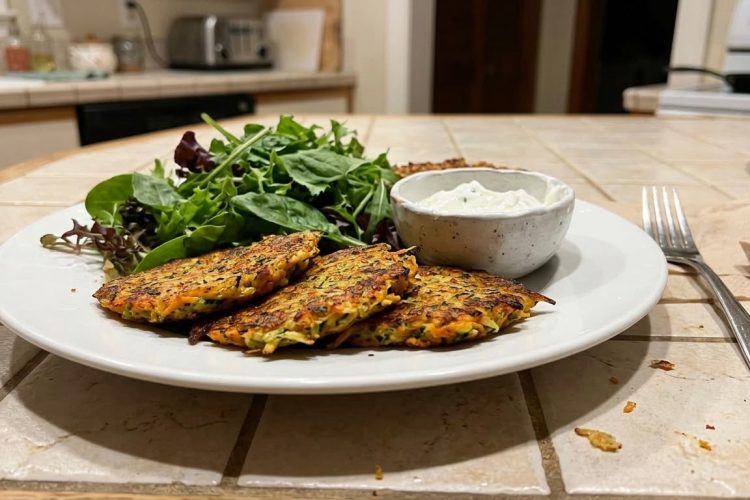
Crispy vegetable fritters are a delicious way to enjoy everyday vegetables in a golden, crunchy, and flavorful form. Made with zucchini, potato, carrot, chickpea flour, and a simple blend of herbs and spices, these homemade vegetable pancakes are satisfying without requiring eggs, dairy products, or regular wheat flour. They are suitable for anyone looking for a gluten-free vegan snack, a light lunch, or an easy vegetable side dish that the whole family can enjoy.
What makes this crispy vegetable fritters recipe especially appealing is its combination of simple ingredients and straightforward preparation. Chickpea flour helps bind the grated vegetables together, while chia or flax eggs provide additional structure without using animal products. The vegetables bring natural sweetness, moisture, and texture, and the seasonings create a savory flavor in every bite. Once pan-fried, the fritters develop a crisp exterior while remaining tender inside, making them a wonderful addition to everyday meals.
These vegan vegetable fritters are also an excellent way to use vegetables already sitting in your refrigerator. Zucchini, carrots, and potatoes form the base, but the recipe can be adapted with other vegetables, herbs, and spices when you want something different. With approximately 10 minutes of preparation and 15 minutes of cooking, you can prepare a batch of homemade vegetable pancakes in about 25 minutes.
What Makes These Crispy Vegetable Fritters Special?
One of the best things about homemade vegetable fritters is their versatility. They can be served as an appetizer before dinner, enjoyed as a midday snack, or paired with a fresh salad for a simple lunch. Their crisp edges and savory vegetable filling make them appealing to people who enjoy potato pancakes, vegetable patties, and Korean-inspired vegetable pancakes. They are easy to portion, simple to customize, and suitable for many occasions.
The chickpea flour is an important part of this recipe because it provides a different texture and flavor from ordinary all-purpose flour. Made from ground chickpeas, it has a naturally nutty taste that complements the vegetables and spices. It also contributes plant-based protein and fiber, making it a useful ingredient in vegan cooking. When combined with the prepared vegetables and a suitable egg substitute, chickpea flour creates a mixture that can be shaped into patties and pan-fried until golden.
Another advantage is that these fritters do not require complicated equipment. A hand grater or food processor, a mixing bowl, a clean kitchen cloth, and a skillet are enough to prepare them. The most important step is removing excess moisture from the vegetables before mixing the batter. With this simple preparation technique, you can make vegetable fritters that hold together better and have a much more appealing texture.
Ingredients You Need for Vegan Vegetable Fritters
Zucchini
Zucchini provides a tender texture and a mild, fresh flavor that works well with the other vegetables. It contains considerable moisture, so it must be grated and drained before being mixed with the chickpea flour. Removing excess liquid is particularly important because wet zucchini can make the batter loose and prevent the fritters from becoming crisp. Medium-sized zucchini are convenient for this recipe, and a medium-hole grater helps create evenly sized shreds.
Potato
Potato gives the fritters a familiar, comforting flavor and helps create a satisfying texture. When grated, it mixes easily with the zucchini and carrot, producing vegetable patties that become golden as they cook. A large potato is used in this recipe. After grating, make sure to squeeze out its excess moisture along with the other vegetables so that the mixture remains firm enough to shape and fry.
Carrot
Carrot adds a gentle sweetness and a pleasant color to the finished fritters. Its fine shreds distribute throughout the mixture, helping every patty contain a combination of vegetables. A medium carrot is sufficient for this batch. Grating the carrot using the same size holes as the zucchini and potato helps the vegetables cook more evenly and makes it easier to form consistent patties.
Chickpea Flour
Chickpea flour is the main binding ingredient and gives these gluten-free vegetable fritters their distinctive flavor. It is a useful alternative to conventional flour for people preparing vegan and wheat-free dishes. The flour absorbs some of the remaining moisture from the vegetables and combines with the chia or flax egg to help the patties hold their shape. Measure the flour carefully, following the recipe quantities, to maintain a good balance between vegetables and binder.
Chia Eggs or Flax Eggs
A chia egg or flax egg is a plant-based alternative to an ordinary egg. It is made by mixing ground chia seeds or ground flaxseed with water and allowing the mixture to thicken. This creates a gel-like consistency that helps bind the grated vegetables together. For the chia version, combine one tablespoon of ground chia seeds with three tablespoons of water and leave it for approximately 10 minutes. Prepare the flax version similarly, using a suitable ground flaxseed mixture.
Olive Oil and Seasonings
Olive oil is used to pan-fry the fritters, helping the outside become golden and crisp. Thyme, paprika, garlic powder, onion powder, salt, and black pepper give the vegetable mixture a savory flavor without overwhelming the natural taste of the vegetables. These seasonings work particularly well with chickpea flour because its slightly earthy flavor complements aromatic herbs and spices. Keep the quantities as listed in the recipe for a balanced result.
Tips for the Best Gluten-Free Vegetable Fritters
Remove as Much Water as Possible
Draining is the most important technique for achieving crisp vegetable fritters that stay together. Zucchini contains a substantial amount of water, and potatoes also release moisture when grated and salted. Press the mixture firmly in a clean cloth rather than relying only on a sieve. Removing excess liquid helps the chickpea flour and plant-based binder work more effectively, giving the patties a firmer texture and making them easier to turn in the skillet.
Keep the Patties Similar in Size
Evenly shaped fritters are easier to cook consistently. If some patties are very thick while others are thin, they will brown at different speeds and may require different cooking times. Weighing portions at approximately 50 grams can help produce a uniform batch. Flatten each portion gently and avoid pressing so hard that the vegetables are forced apart. A consistent thickness allows the center to heat through while the outside develops a pleasant golden crust.
Avoid Crowding the Pan
Cook only as many fritters as comfortably fit in your skillet. When the pan is overcrowded, the patties are more difficult to turn, and the cooking temperature may drop. This can lead to softer surfaces instead of crisp edges. Cooking in smaller batches gives each fritter enough room to brown properly. Keep the finished patties warm in a low oven while you finish cooking the remaining mixture.
Adjust the Flavor With Herbs and Spices
The basic seasoning combination is versatile enough to complement many vegetables. You can experiment with fresh parsley, dill, cilantro, or chives when you want a different herbal flavor. A small amount of nutritional yeast can add a savory, slightly nutty taste, while chili powder or cayenne pepper can introduce extra heat. Make changes according to your preferences while keeping the vegetable mixture balanced enough to shape into patties.
Frequently Asked Questions
Why Are My Vegetable Fritters Falling Apart?
Fritters may fall apart when the vegetables contain too much moisture, the mixture has not been combined evenly, or the patties are turned before their surfaces have set. Squeeze the grated zucchini, potato, and carrot thoroughly before mixing them with the chickpea flour and chia or flax egg. Shape the mixture firmly and allow each side to cook for two to three minutes before turning it gently with a spatula.
How Can I Make Vegetable Fritters Extra Crispy?
The best way to improve crispness is to remove excess water from the vegetables and avoid overcrowding the skillet. Shape the patties evenly and cook them in hot olive oil over medium-high heat. Pressing them gently with a spatula can help increase contact with the pan, allowing the surfaces to brown. Once cooked, place them briefly on kitchen paper and serve while warm.
Are These Vegetable Fritters Gluten-Free?
Yes, the recipe uses chickpea flour rather than conventional wheat flour, making it suitable for a gluten-free preparation when all ingredients are verified gluten-free. Check the packaging of the chickpea flour, seasonings, and any optional additions if you need to avoid gluten strictly, especially when cross-contact is a concern. No wheat flour is listed among the original ingredients.
Are These Fritters Suitable for a Vegan Diet?
Yes, the original recipe is vegan when prepared with a chia egg or flax egg and olive oil. It contains no eggs or dairy products as written. If you decide to add cheese, choose a dairy-free alternative to maintain the vegan version. Also check any dipping sauces or additional ingredients you serve alongside the fritters.
Can I Use Other Vegetables?
Yes, you can experiment with vegetables such as green onions, broccoli, corn, eggplant, and peppers. Sweet potato and butternut squash are also possible alternatives to regular potato. However, different vegetables contain different amounts of moisture and may cook at different speeds. Drain watery vegetables thoroughly, cut or grate the ingredients consistently, and adjust preparation as needed to help the patties retain their shape.
What Can I Do With the Drained Vegetable Liquid?
The liquid squeezed from the vegetables does not necessarily need to be discarded. You can add it to homemade vegetable stock, soup, curries, or the cooking liquid for rice and pasta. It may also be suitable for bread dough in place of some of the water. Taste it first, as it can be salty after the vegetables have been rested with salt. Avoid adding it to dishes where that extra salt would be undesirable.
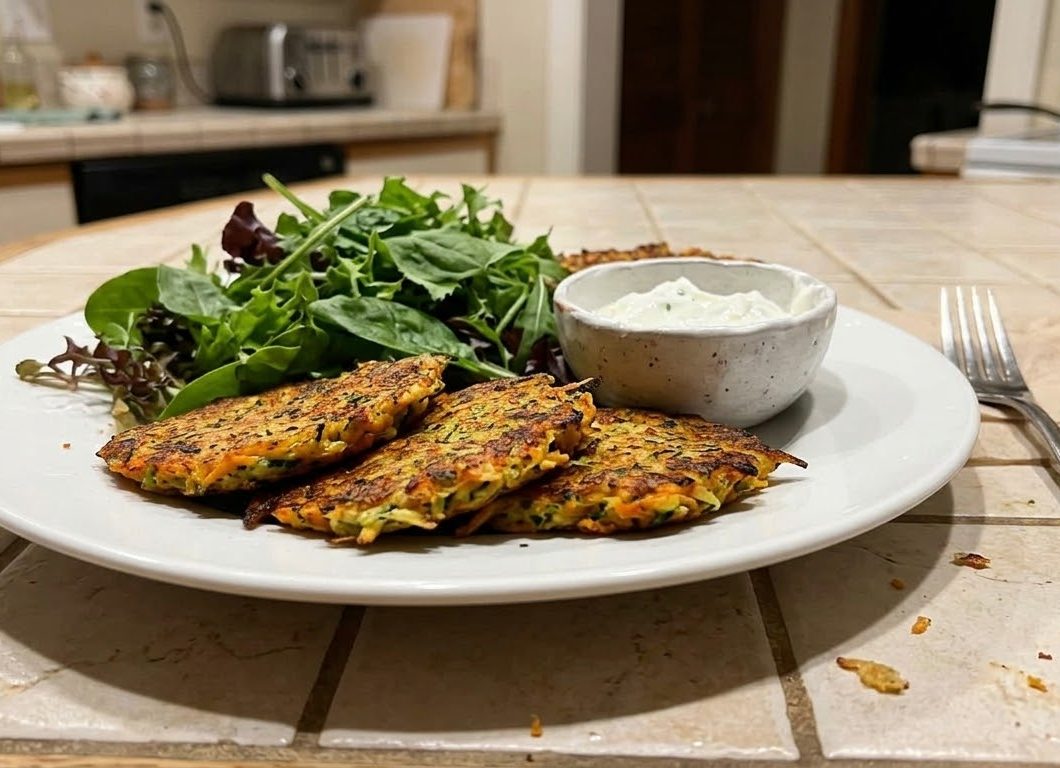
Crispy Vegetable Fritters (Gluten-Free, Vegan)
 Recipe by admin1
Golden, savory vegetable patties made with chickpea flour and a plant-based binder.
6
servings10
minutes15
minutes25
minutesIngredients
12 oz zucchini (2 medium-sized)
7 oz potato (1 large)
3.5 oz carrot (1 medium-sized)
1/2 cup chickpea flour
2 chia eggs or flax eggs
2 Tbsp olive oil
1/2 tsp thyme
1/2 tsp paprika
1/2 tsp garlic powder
1/2 tsp onion powder
1/2 tsp salt
1/4 tsp black pepper
Directions
- Grate the zucchini, potato, and carrot using a medium-hole hand grater or food processor. Place them in a bowl, add the salt, mix well, and let rest for 10–15 minutes to release excess moisture.
- Transfer the grated vegetables to a clean muslin cloth or cheesecloth and squeeze out as much liquid as possible. Alternatively, drain them in a sieve and press firmly.
- Mix 1 tablespoon of ground chia seeds with 3 tablespoons of water. Leave for about 10 minutes until thickened. If using a flax egg, prepare it using ground flaxseed and water.
- Combine the chickpea flour with the thyme, paprika, garlic powder, onion powder, salt, and black pepper. Add the drained vegetables and prepared chia or flax egg. Mix until evenly combined.
- Divide the mixture into approximately 50 g portions. Shape into round patties and flatten gently between parchment paper if needed. Freeze any uncooked portions you do not plan to use immediately.
- Heat 1–2 tablespoons of olive oil in a large skillet over medium-high heat. Fry 1–2 patties at a time for 2–3 minutes per side, pressing gently with a spatula for a crispier surface.
- Place cooked fritters on kitchen paper to absorb excess oil. Keep warm in an oven at 230°F (110°C) while cooking the remaining patties. Serve warm with your preferred dipping sauce.
Notes
- Removing excess moisture helps the fritters bind properly and prevents a soggy texture.
- Use it in vegetable stock, soups, curries, or to cook rice and pasta, provided the salt level is suitable.
- Green onions, broccoli, corn, eggplant, and peppers can provide variety. Salt and drain moisture-rich vegetables as needed.
- Parsley, dill, chives, cilantro, nutritional yeast, or chili powder can add different flavors.
- Dairy-free mozzarella or vegan Parmesan can be added for a vegan version. Regular Parmesan or cheddar can be used if you do not require the recipe to remain vegan.
- Refrigerate cooked leftovers in an airtight container and reheat in a skillet or oven to help restore crispness.


)