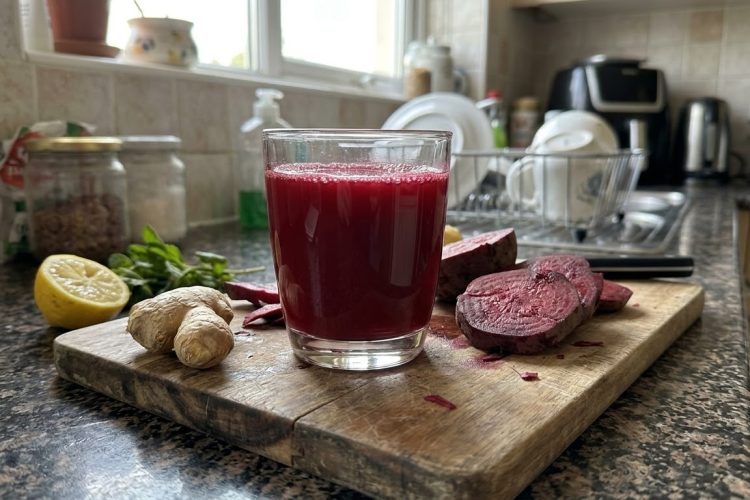
Fresh beetroot juice is a colorful homemade drink that combines the earthy sweetness of beetroot with the natural fruitiness of apple, the mild flavor of carrot, and the refreshing taste of lemon. A little fresh ginger adds gentle warmth, creating a balanced drink that is both flavorful and easy to prepare. This beetroot juice recipe is suitable for breakfast, a midday refreshment, or a drink to enjoy as part of your fitness routine.
Making beetroot juice at home gives you control over the ingredients, sweetness, and texture. Instead of relying on packaged drinks that may contain added sugar or preservatives, you can prepare a fresh version using simple ingredients from your kitchen. A blender is all you need to get started, along with filtered water to help combine everything smoothly. You can keep the natural pulp for a thicker drink or strain the mixture for a lighter, smoother consistency.
This fresh beetroot carrot apple juice is also easy to customize according to your taste. If you prefer a sweeter drink, choose a naturally sweet apple. For a stronger citrus flavor, add a little more lemon juice, or increase the ginger slightly if you enjoy a warming finish. Optional turmeric and black pepper can introduce additional earthy and peppery notes, making this homemade vegetable and fruit juice a versatile addition to your daily menu.
Why Make Homemade Beetroot Juice?
Homemade beetroot juice offers a convenient way to combine fresh vegetables, fruit, and aromatic ingredients in one drink. Beetroot is known for its deep red-purple color and naturally earthy taste, but its flavor becomes much milder when mixed with carrot and apple. Lemon adds brightness, while ginger creates a gentle spicy finish. Together, these ingredients produce a refreshing drink without requiring added sweeteners.
Another advantage of preparing fresh juice at home is the ability to adjust its consistency. Some people prefer smooth juice without visible pulp, while others enjoy a thicker drink that retains more of the blended ingredients. Using a blender rather than a juicer also allows you to keep the pulp if desired, which helps retain more of the ingredients’ natural dietary fiber.
Fresh beetroot juice can fit into a balanced eating pattern alongside whole fruits, vegetables, protein-rich foods, and other nutritious meals. Beetroot contains naturally occurring dietary nitrates, which the body can convert into nitric oxide. Nitric oxide helps regulate blood vessel function, and research into dietary nitrate intake has examined its potential effects on circulation and exercise performance. However, the effects vary between individuals, and beetroot juice should not be considered a substitute for medical treatment or a guaranteed way to improve athletic performance.
The recipe is particularly useful for people who enjoy preparing simple drinks with recognizable ingredients. You can make it shortly before serving, adjust the flavor to your preference, and avoid unnecessary ingredients. Its vibrant appearance also makes it an appealing alternative to ordinary breakfast beverages or heavily sweetened fruit drinks.
Ingredients for Fresh Beetroot Juice
Each ingredient in this beetroot juice recipe contributes a different flavor, texture, or nutritional characteristic. Beetroot provides the distinctive color, carrot adds mild sweetness, and apple softens the earthy taste. Ginger and lemon create a refreshing contrast, while filtered water helps the blender process the ingredients into a drinkable consistency.
Beetroot: The Main Ingredient
Beetroot is the foundation of this fresh juice, providing its deep color, earthy aroma, and naturally sweet flavor. When combined with fruit and other vegetables, its distinctive taste becomes easier to enjoy, even for people who find plain beetroot juice too strong. Fresh roots are ideal because they offer a firm texture and a clean, natural flavor.
Beetroot provides several nutrients, including folate, manganese, and potassium. It also contains dietary nitrates, which have received attention in nutrition research because of their role in nitric oxide production. The amount of these compounds can vary depending on the beetroot itself and how the juice is prepared, so the drink should be viewed as one possible part of an overall nutritious diet.
Choose beetroot that feels firm and has no obvious soft spots, mold, or damaged areas. Wash it thoroughly under running water to remove soil and dirt. You can peel the skin if you prefer a smoother result, although thoroughly washed beetroot may also be blended with the skin on. Cutting it into smaller pieces before blending makes preparation easier and helps the blender process it more evenly.
Carrot: Natural Sweetness and a Mild Flavor
Carrot balances the earthy taste of beetroot with its gentle sweetness and fresh vegetable flavor. This combination is especially useful when preparing homemade juice without added sugar because carrot contributes natural sweetness without overwhelming the other ingredients. It also helps create a rounded flavor that works well with apple, lemon, and ginger.
Carrots contain beta-carotene, a plant pigment that the body can convert into vitamin A. Vitamin A supports normal vision, immune function, and other essential body processes. Carrots also provide dietary fiber and other naturally occurring plant compounds, making them a useful ingredient in a varied diet.
Before preparing your juice, wash the carrot thoroughly and remove the green top. Peeling is optional, depending on your preference and the condition of the carrot. Slice it into manageable pieces so it blends more easily with the beetroot and apple. Fresh, firm carrots generally provide the best flavor and texture for this recipe.
Apple: A Fruity and Naturally Sweet Addition
Apple gives beetroot juice a pleasant fruity flavor that helps balance its earthy notes. It is an important ingredient for creating a drink that tastes naturally sweet without depending on added sugar. A sweet apple variety will produce a milder, fruitier juice, while a tart variety will add a sharper flavor that pairs particularly well with fresh lemon.
Apples provide dietary fiber when the skin and pulp are retained, along with naturally occurring plant compounds and small amounts of vitamins and minerals. Keeping the skin on is a convenient option if the apple has been washed thoroughly. However, peeling it is also perfectly acceptable if you prefer a smoother texture or want to reduce the amount of visible skin in the finished drink.
Remove the apple core and seeds before blending, then cut the fruit into smaller pieces. If your beetroot has a particularly strong earthy taste, using a sweet apple can help make the finished drink more balanced. For a less sweet result, choose an apple with a more tart flavor.
Fresh Ginger: A Gentle Spicy Kick
Fresh ginger adds a distinctive warmth that makes this juice more interesting than a simple beetroot and apple combination. Its slightly spicy, aromatic character contrasts with the sweetness of the fruit and vegetables, giving the drink a refreshing finish. Because ginger has a noticeable flavor, a small quantity is usually enough to make a difference.
Ginger is commonly used in homemade drinks, teas, and other recipes because of its aromatic compounds and traditional culinary uses. It also contains naturally occurring substances that have been investigated for their antioxidant properties. However, adding ginger to juice does not automatically make the drink a treatment for digestive problems or other health conditions.
Peel the ginger if desired, then cut a small piece into manageable portions before blending. If you are unfamiliar with its flavor, begin with a modest amount and adjust the quantity in future batches. Too much ginger can overpower the apple and carrot, so the aim is to create a gentle warming note rather than an intensely spicy drink.
Lemon: Bright Citrus Flavor
Fresh lemon juice brings acidity and brightness to the mixture. Its sharp citrus flavor helps balance the natural sweetness of apple and carrot while complementing the earthy beetroot and warm ginger. This contrast gives the drink a cleaner, more refreshing taste, especially when served cold.
Lemon provides vitamin C and contributes a fresh aroma that works well with the other ingredients. Freshly squeezed juice is recommended because it gives the drink a lively citrus flavor. Bottled lemon juice can have a different taste depending on the product, so fresh lemon is generally the better choice when available.
Squeeze the lemon separately and remove any seeds before adding the juice to the blender. You can start with the amount specified in your recipe and adjust slightly after tasting. If the juice seems too sweet or earthy, a small additional squeeze of lemon may help improve the balance.
Filtered Water: For a Smooth Consistency
Filtered water helps the blender combine the beetroot, carrot, apple, ginger, and lemon into a drinkable mixture. Without enough liquid, the ingredients may become difficult to blend evenly, particularly when the beetroot and carrot are cut into larger pieces. Adding water gradually gives you better control over the final consistency.
The amount of water affects both texture and flavor. More water creates a lighter drink that is easier to sip, while less water produces a thicker mixture with a more concentrated taste. If you plan to strain the juice after blending, you may prefer a slightly thicker mixture because some liquid will remain trapped in the pulp.
Cold filtered water can help keep the drink refreshing, although room-temperature water also works. Avoid adding too much at once if you want a strong flavor. Begin with the recipe’s specified amount, blend thoroughly, and add a little more only if needed.
Storage and Preparation Advice
Can You Prepare Beetroot Juice in Advance?
Freshly prepared beetroot juice generally tastes best soon after blending, when the fruit and vegetables have their brightest flavor. If you need to prepare it ahead of time, transfer the drink into a clean, airtight container and refrigerate it promptly. A tightly sealed container helps limit exposure to air and reduces the chance of the juice absorbing odors from other foods.
For best quality, aim to consume refrigerated homemade juice within about 24 hours. The exact quality depends on the freshness of the ingredients, cleanliness during preparation, and how quickly the drink is chilled. Discard it if it develops an unusual smell, visible mold, or another clear sign of spoilage. Do not leave freshly prepared juice at room temperature for extended periods.
Should You Freeze Beetroot Juice?
Freezing is an option if you want to save a portion for later, although the texture and flavor may change after thawing. Pour the juice into a freezer-safe container, leaving some space at the top for expansion. Thaw it in the refrigerator and stir or shake it well before serving because natural separation may occur. For the best taste, freezing in small portions is often more convenient than freezing a large batch.
Frequently Asked Questions
Is Fresh Beetroot Juice Healthy?
Fresh beetroot juice provides nutrients from beetroot, carrot, apple, and lemon, along with naturally occurring plant compounds. Beetroot contains dietary nitrates, while carrots supply beta-carotene and apples contribute fruit-based nutrients. Its overall nutritional value depends on the quantities used and whether the juice is strained. It can be part of a balanced diet, but it is not a cure for disease or a substitute for medical advice.
Can I Make Beetroot Juice Without a Juicer?
Yes. A regular kitchen blender works well for this recipe. Cut the ingredients into small pieces, add filtered water, and blend until smooth. You can drink the mixture with its pulp or strain it through a fine-mesh sieve for a smoother consistency. This method makes homemade beetroot juice accessible even if you do not own a dedicated juicing machine.
Does Beetroot Juice Need Added Sugar?
No additional sugar is necessary for this recipe because apple and carrot contribute natural sweetness. The final taste will depend on the varieties and ripeness of the produce. If you prefer a sweeter drink, select a sweet apple rather than automatically adding sugar or syrup. Lemon and ginger also help balance the flavor without relying on extra sweeteners.
Can I Drink Beetroot Juice Every Day?
Whether daily beetroot juice suits you depends on your overall diet, serving size, and individual health circumstances. Beetroot contains oxalates, and people who have been advised to limit oxalate intake or who have certain kidney-related concerns should ask a healthcare professional about appropriate consumption. Beetroot can also cause harmless pink or reddish urine or stools in some people, but unusual or persistent symptoms should be discussed with a clinician.
Why Does My Beetroot Juice Separate?
Separation is normal in homemade juice because the blended ingredients contain particles of different sizes and densities. Heavier pulp can settle at the bottom while thinner liquid remains above it. Stir the juice or shake the sealed container gently before drinking. If you want a more uniform texture, blend it thoroughly and strain it through a fine-mesh sieve.
Can I Add More Ginger or Lemon?
Yes, you can adjust the flavor slightly to suit your preferences. Additional ginger produces a stronger, warmer taste, while extra lemon makes the drink more citrusy and tart. Add small amounts at a time, blend briefly, and taste before adding more. This approach helps maintain a pleasant balance between the earthy beetroot, sweet apple, mild carrot, and refreshing citrus.
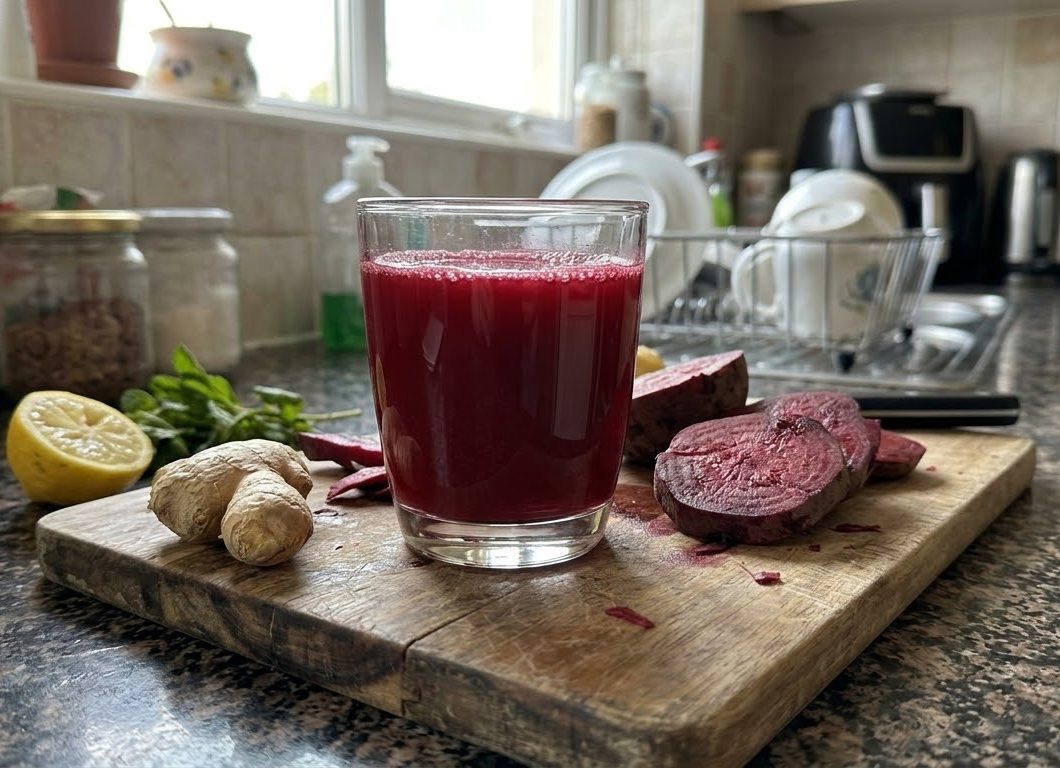
Healthy Beetroot, Ginger and Lemon Drink
 Recipe by admin1
A vibrant homemade beetroot juice made with fresh beetroot, carrot, apple, ginger, lemon, and filtered water.
4
servings5
minutes55
kcal3
minutes8
minutesIngredients
1 medium-sized Beetroot
1 medium-sized Apple
1 small-sized Carrot
4 cm or 1 inch fresh Ginger
1/2 a Lemon juice
1/8 tsp pinch of black pepper optional
1/8 tsp of Turmeric optional
1-1/2 cup of Filter Cup
Directions
- Thoroughly wash the beetroot and carrot. You may peel them if you prefer, or keep the skins on when using thoroughly washed organic produce.
- Trim the hard end from the beetroot. Peel it if desired, then cut the beetroot into small chunks and place the pieces into the blender jar.
- Remove the green top from the carrot, cut the carrot into chunks, and add the pieces to the blender.
- Cut the apple in half, remove the core, and cut the apple into small pieces. Add the prepared apple to the blender jar.
- Peel the ginger with a teaspoon if preferred. Alternatively, you can leave the skin on after thoroughly washing it. Cut the ginger into small pieces and add it to the blender.
- Squeeze the juice from half a lemon into the blender. Add the turmeric and black pepper if using.
- Pour 1 cup of filtered water into the blender and begin blending.
- Gradually add the remaining 1/2 cup of filtered water while blending.
- If you prefer a thinner juice, add more water according to your preference. For a smoother drink with less fiber, strain the juice through a fine sieve before serving.
- Pour the freshly blended beetroot juice into glasses and serve immediately or chill briefly before serving.


