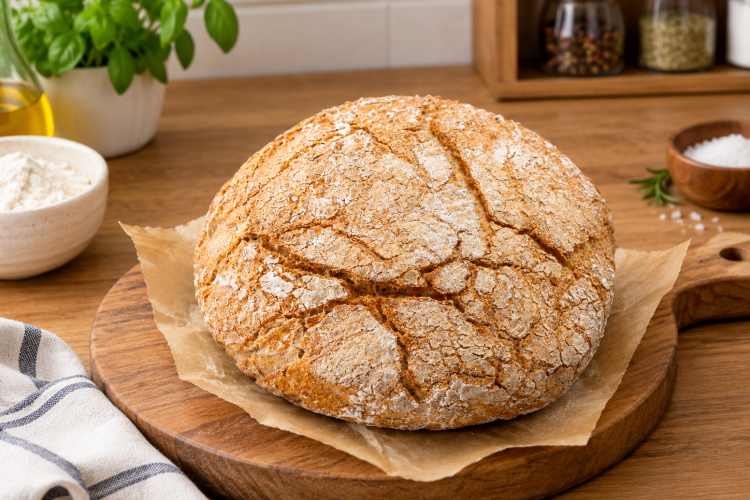
If you are looking for an easy gluten-free bread recipe that does not require complicated techniques, this no-knead gluten-free bread is a great place to start. It has a soft, fluffy center and a beautifully crisp, golden crust, giving you the kind of homemade bread texture that can be difficult to find in gluten-free baking. The dough comes together with a few simple ingredients, and there is no kneading, mixer, or complicated shaping process involved.
One of the best things about this gluten-free bread is its straightforward preparation. Instead of spending a long time working the dough, you simply mix the ingredients, cover the dough, and let it rest at room temperature. The five-hour resting period gives the dough time to develop structure before baking. Although the resting time is longer than the active preparation, the hands-on work is minimal, making this a convenient recipe for a relaxed baking day.
Why This Gluten-Free Bread Is Worth Making
Gluten-free bread can sometimes be disappointing when it turns out dry, dense, crumbly, or overly firm. This recipe takes a different approach by creating a thick, sticky dough that is allowed to rest before being baked in a covered baking dish. The result is a loaf with a tender interior and a crisp exterior. The contrast between the soft center and lightly crunchy crust makes it enjoyable fresh from the oven or served with your favorite toppings.
Another advantage is that this is a genuine no-knead bread recipe. Traditional bread often requires kneading to develop gluten and create an elastic dough. Since gluten-free flour does not behave in the same way as regular wheat flour, kneading is unnecessary here. Instead, the recipe relies on proper hydration, yeast activation, resting time, and baking technique to create the finished loaf.
The recipe also works well when you want fresh bread without spending the entire day in the kitchen. The dough requires about five hours of resting, but that time does not require active attention. You can prepare the dough earlier in the day, allow it to rise while you continue with other tasks, and bake the bread later. With the baking time included, you can have a homemade gluten-free loaf ready for an evening meal.
What Makes the Texture So Good
The texture of homemade gluten-free bread depends heavily on the flour, liquid, yeast, and baking method. In this recipe, the dough should be thick and sticky rather than firm like traditional wheat-based bread dough. That consistency is important because gluten-free flour absorbs liquid differently, and the dough needs enough moisture to produce a soft interior after baking.
The covered baking method also plays an important role. Baking the dough in a covered dish helps retain moisture during the first part of cooking, allowing the loaf to develop its structure without drying out too quickly. The lid is removed later so that the outside can continue baking and become light golden and crisp. If your baking dish does not have a lid, double foil can be used as a covering.
The final texture should be soft enough to slice comfortably while still having enough structure to hold together. Once the bread has cooled slightly, the crust should provide a pleasant contrast to the tender inside. This makes the loaf suitable for toast, sandwiches, breakfast, or simply serving alongside a meal.
Choosing the Gluten-Free Flour
The original recipe uses Caputo gluten-free flour, and that flour has been specifically tested for this preparation. Gluten-free flour blends can vary considerably in their ingredients and absorption, so switching to another brand may change the consistency of the dough. For the most predictable result, using the specified gluten-free flour is the best approach.
If you use a different gluten-free flour blend, pay close attention to the dough consistency rather than expecting it to look exactly the same. The target is a thick, sticky dough that is not excessively watery and is not dry or stiff. Different flour blends may contain different combinations of starches, grains, and binding ingredients, which can affect how much liquid they absorb.
Because gluten-free baking is sensitive to flour composition, the safest approach is to follow the measurements carefully and avoid making unnecessary ingredient substitutions. The recipe is deliberately simple, so maintaining the listed ingredients gives you the best chance of achieving the intended texture.
How to Activate the Yeast
Yeast activation is one of the most important early steps. Begin by combining the warm water, sugar, and active dry yeast in a bowl and stirring them together. The water should be lukewarm rather than very hot or cold. After approximately five minutes, the yeast should show signs that it has activated.
Water temperature matters because yeast is sensitive to extreme temperatures. Water that is too cold may slow activation, while water that is too hot can prevent the yeast from working properly. If the yeast does not activate, it is better to repeat the step rather than continue with inactive yeast, because the dough may not rise properly.
Taking a few minutes to check the yeast before adding the flour can save the entire loaf. Once the yeast mixture is ready, it can be incorporated into the dry ingredients.
Preparing the No-Knead Dough
Place the gluten-free flour and salt in a large bowl and stir them together. Slowly add the activated yeast mixture while stirring. Continue mixing until everything is incorporated and the dough reaches the desired consistency. It should be thick and sticky, but it should not look excessively wet or dry.
Unlike conventional bread dough, there is no need to knead this mixture. In fact, attempting to treat it like a traditional wheat dough is unnecessary. Once the ingredients are evenly combined, the dough is ready for its resting period.
Cover the bowl and leave the dough at room temperature for five hours. Keep it somewhere away from drafts so that the dough can rest under relatively stable conditions. During this time, the yeast works through the dough and helps it develop the characteristics needed for baking.
Shaping the Dough
After the five-hour resting period, the dough should have risen. Lightly flour your work surface and carefully transfer the dough onto it. Add a little flour to the top as needed so that you can shape it without excessive sticking.
The shaping process is intentionally simple. There is no kneading involved. Gently shape the dough into an even oval loaf. Avoid aggressively working the dough, as the goal is simply to create a manageable shape for baking.
Once shaped, transfer the dough into a baking dish lined with parchment paper. The recipe does not require a particular specialized bread pan, so an appropriate baking dish can be used. Cover the dish with its lid. If your dish does not have a lid, use a double layer of foil to cover it securely.
Why You Start With a Cold Oven
One unusual but important part of this recipe is that the bread goes into a cold oven. Do not preheat the oven first. Place the covered baking dish into the cold oven, then set the oven to 450°F and begin the 40-minute baking period.
This method differs from many conventional bread recipes, which normally call for a fully preheated oven. Following the specified cold-oven method is therefore important when making this particular loaf. Starting the bread in the cold oven allows the dough and baking environment to heat gradually.
Bake the covered bread for 40 minutes. After this first stage, carefully remove the cover and continue baking for approximately 30 minutes or less, depending on your oven. The uncovered stage is what helps the outside of the bread develop its light golden color and crisp finish.
How to Tell When the Bread Is Done
Ovens can vary, so the final baking time may need slight adjustment. The loaf should be light and golden all over when it is finished. If the exterior still appears pale, it may need additional time, while an overly dark crust can indicate that the bread has been baked too long.
Because the bread continues to settle after leaving the oven, resist the temptation to cut into it immediately. Allow it to cool for about five to ten minutes before slicing. This short cooling period makes the bread easier to handle and gives the interior a chance to stabilize.
Freshly baked gluten-free bread can be especially appealing while it is still warm. Serve it as soon as it has cooled enough to slice comfortably, or allow it to cool further if you prefer cleaner slices.
Serving Ideas
This homemade gluten-free bread can be used in many of the same ways as everyday bread. Fresh slices can be served alongside soups, salads, roasted vegetables, or other main dishes. Its crisp crust also makes it enjoyable as a simple breakfast bread or afternoon snack.
For breakfast, slices can be toasted and served with your preferred toppings. The bread can also be used for sandwiches when you want a homemade gluten-free alternative to packaged bread. Because the loaf has a soft interior and a flavorful crust, it does not need complicated additions to be enjoyable.
You can also serve warm slices as part of a family meal. The simple flavor allows the bread to complement savory dishes without overpowering them. Its versatility makes it useful to keep in your regular gluten-free baking rotation.
Frequently Asked Questions
Can I make this bread without kneading?
Yes. This recipe is specifically designed as a no-knead gluten-free bread. Once the flour, salt, and activated yeast mixture are combined into a thick sticky dough, the dough simply rests before being shaped and baked.
Can I use another gluten-free flour?
The original recipe uses Caputo gluten-free flour, and that is the flour used for the tested version. Other gluten-free flour blends may behave differently, particularly in how they absorb the water, so results can vary when substituting another brand.
Why did my yeast not activate?
The water temperature is usually an important factor. The water should be lukewarm. Water that is too hot or too cold can interfere with yeast activation. If the yeast does not activate after five minutes, repeat the activation step with properly lukewarm water.
Does the oven need to be preheated?
No. For this recipe, the bread should go into a cold oven. Place the covered baking dish inside, set the oven to 450°F, and begin the 40-minute baking period immediately.
How should I store the bread?
For the best texture, allow the loaf to cool before storing it. Keep it protected from excess moisture and air. If you do not plan to eat it soon, freezing individual slices can be a practical way to preserve the bread for later use.
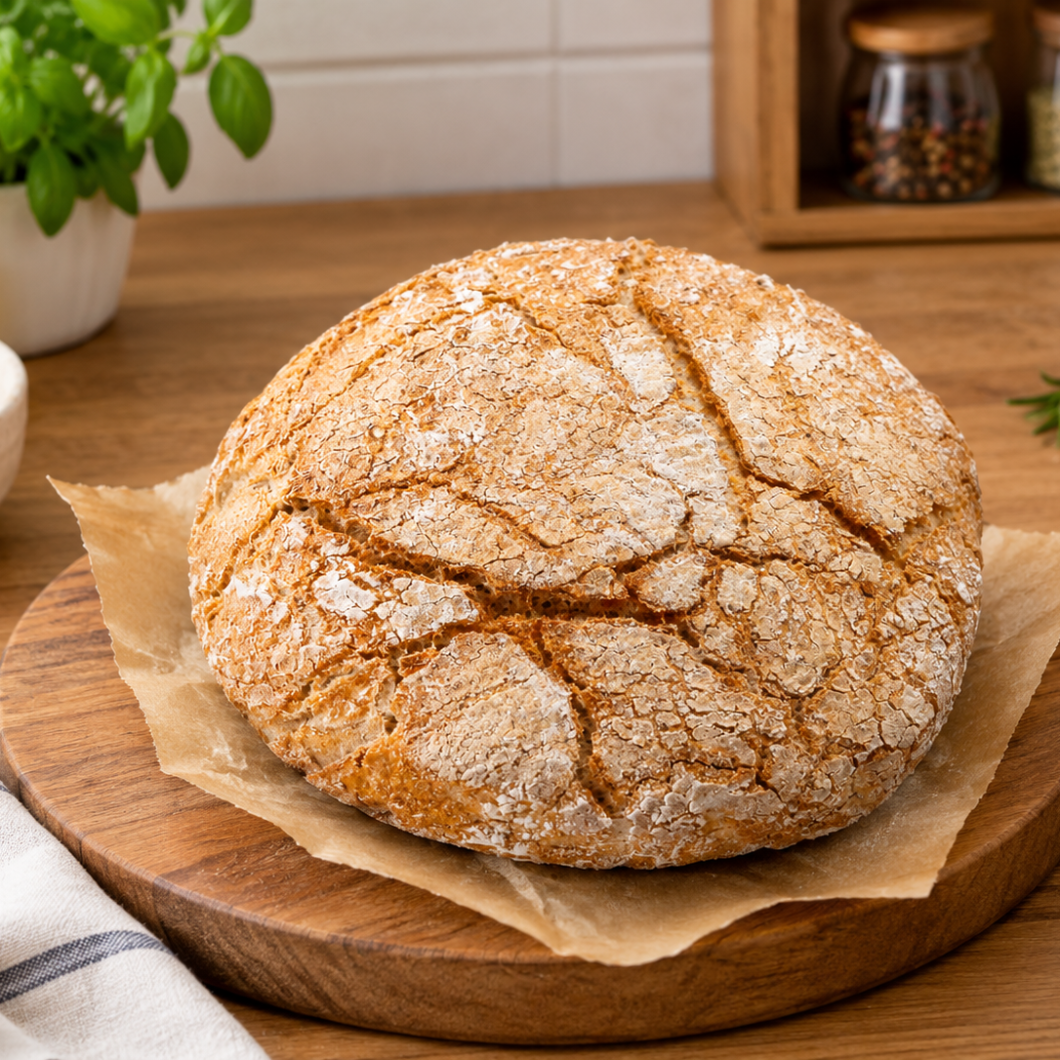
No-Knead Gluten-Free Bread
 Recipe by admin1
This easy no-knead gluten-free bread has a soft, fluffy interior and a crisp, light golden crust. It requires simple ingredients, no kneading, and only a short amount of hands-on preparation.
1
servings10
minutes1
hour10
minutes122
kcal5
hours6
hours20
minutesIngredients
- Activate the Yeast
1.5 cups warm water
1 teaspoon sugar
½ teaspoon active dry yeast
- Dry Ingredients
3 cups gluten-free flour, I used Caputo
1 teaspoon salt
Directions
- Add the warm water, sugar, and active dry yeast to a bowl. Stir well and allow the mixture to sit for approximately five minutes. The water should be lukewarm. If the yeast does not activate, repeat this step with fresh yeast and properly warm water.
- In a separate large bowl, combine the gluten-free flour and salt. Stir the dry ingredients together so the salt is evenly distributed throughout the flour.
- Slowly pour the activated yeast mixture into the flour while stirring. Continue mixing until the ingredients are combined and you have a thick, sticky dough. The dough should not be excessively wet or dry.
- Cover the bowl and leave the dough at room temperature for five hours. Keep it away from drafts while it rests and rises.
- Once the dough has risen, lightly flour your counter and transfer the dough onto the floured surface. Sprinkle a little flour over the top and gently shape the dough into an even oval loaf. Do not knead the dough.
- Line a suitable baking dish with parchment paper and transfer the shaped dough into the dish. Cover it with the dish’s lid. If your baking dish does not have a lid, cover it with a double layer of foil.
- Place the covered baking dish into a cold oven. Set the oven temperature to 450°F and immediately begin baking for 40 minutes. Do not preheat the oven.
- After 40 minutes, carefully remove the lid or foil. Continue baking uncovered for another 30 minutes or less, depending on your oven.
- The bread is ready when the exterior is light and golden all over. Remove it from the oven and allow it to cool for approximately five to ten minutes before slicing.
- Serve warm or at room temperature and enjoy your homemade no-knead gluten-free bread.
Nutrition Facts
- Total number of serves: 1
- Calories: 122kcal
- Fat: 1g
- Carbohydrates: 27g
- Fiber: 4g
- Sugar: 2g
- Protein: 4g


