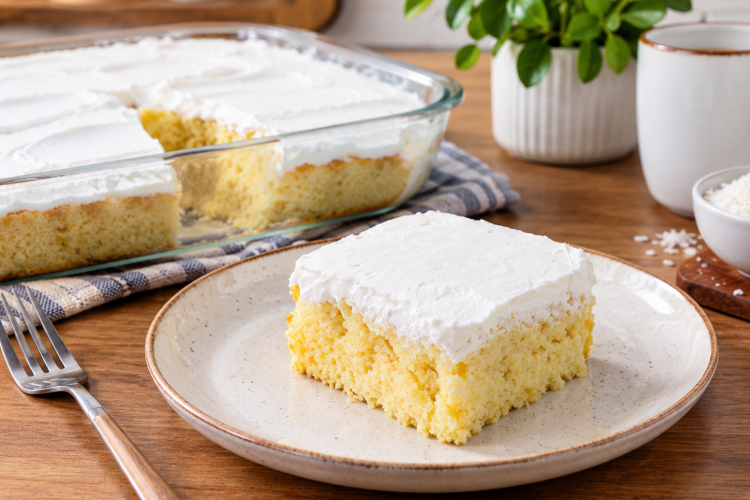
Greek yogurt cake is a simple, light, and convenient dessert for anyone who wants homemade cake without the usual combination of oil, eggs, and added sugar. This easy low-calorie cake uses just a few basic ingredients and requires very little preparation.
The result is a soft, tender yellow cake with a pleasant vanilla flavor that can be served on its own or finished with a light topping.
What makes this Greek yogurt cake especially appealing is how uncomplicated the recipe is. Instead of adding oil or butter to create moisture, nonfat vanilla Greek yogurt becomes the key ingredient that helps give the cake its soft texture. Combined with a sugar-free yellow cake mix and water, it creates a straightforward batter that can be prepared in only a few minutes.
With a total preparation and baking time of about 45 minutes, this recipe is useful when you want an easy dessert without spending a long time in the kitchen. The cake makes 24 servings, making it suitable for family gatherings, casual celebrations, potlucks, or simply keeping a batch ready for a quick sweet treat during the week.
Why Greek Yogurt Works So Well in Cake
Greek yogurt is a useful ingredient in baking because its creamy consistency adds moisture to the batter. In many cake recipes, oil or butter contributes richness and helps prevent the finished cake from becoming dry. Here, yogurt provides an alternative approach while keeping the ingredient list remarkably short.
Nonfat vanilla Greek yogurt also brings a mild tang and vanilla flavor to the batter. That flavor works naturally with a yellow cake mix and creates a dessert that does not need complicated flavoring ingredients. Because the yogurt is already smooth and creamy, it blends easily with the cake mix and water when mixed properly.
The result is a cake that is soft enough to enjoy without a heavy frosting layer. However, if you prefer a more traditional dessert experience, the finished cake can be topped with Cool Whip or your favorite frosting. A light topping can turn this simple cake into a more festive dessert while still keeping preparation easy.
An Easy Low-Calorie Cake for Busy Days
Many homemade cake recipes require several ingredients, including eggs, oil, butter, milk, and sugar. This Greek yogurt cake takes a different approach by relying on a prepared cake mix, yogurt, and water. That makes it particularly convenient for beginner bakers or anyone who wants a quick dessert with minimal measuring and cleanup.
The short ingredient list is also helpful when you need to prepare something quickly. There is no need to separate eggs, soften butter, or prepare a complicated frosting before baking. Simply combine the ingredients, mix until smooth, transfer the batter to a prepared pan, and bake.
Because the recipe produces 24 servings, it is also practical for sharing. Once completely cooled, the cake can be cut into individual portions and served as a simple dessert after a meal. Its familiar yellow-cake flavor makes it an easy choice for both children and adults.
What You Need to Make Greek Yogurt Cake
The original recipe uses three main ingredients: a box of Pillsbury sugar-free yellow cake mix, two individual containers of nonfat vanilla Greek yogurt, and one cup of water. These ingredients work together to create the batter without requiring separate oil or eggs.
The cake mix provides the basic structure and familiar yellow-cake flavor. The nonfat vanilla Greek yogurt supplies moisture and contributes a subtle vanilla note, while water helps bring the ingredients together into a smooth batter. Since the recipe depends on a prepared cake mix, it is important to follow the mixing instructions carefully so the batter is evenly combined.
For the best texture, make sure the yogurt is smooth rather than containing large fruit pieces. Chunks can interfere with the consistency of the batter and may create uneven areas in the finished cake.
How to Make Greek Yogurt Cake
Prepare the Oven
Begin by preheating the oven to 325 degrees F. Allowing the oven to reach the correct temperature before the cake goes inside helps the batter bake consistently. A properly preheated oven is especially important for cakes because the batter needs the right amount of heat from the beginning to rise and set properly.
While the oven is heating, prepare the baking pan. A 9×13-inch pan is used for this recipe, giving the batter enough room to spread into an even layer. Spray the pan with nonstick spray so the finished cake can be removed and portioned more easily.
Mix the Cake Batter
Place the sugar-free yellow cake mix, nonfat vanilla Greek yogurt, and water into a medium-sized mixing bowl. Mix the ingredients on medium speed for approximately two to three minutes. Continue mixing until the batter is smooth and no visible lumps remain.
Avoid rushing this step. A well-mixed batter helps distribute the yogurt evenly throughout the cake mix, which contributes to a more consistent texture. Scrape down the sides of the bowl if necessary so that any dry cake mix is incorporated into the batter.
The finished batter should be evenly blended and suitable for spreading into the prepared pan. Since the recipe is intentionally simple, there is no need to add additional eggs, oil, butter, or sugar.
Prepare the Baking Pan
Once the batter is mixed, pour it into the prepared 9×13-inch pan. Use a spatula or the back of a spoon to spread the batter into an even layer. Keeping the batter level helps the cake bake more uniformly from edge to center.
An even layer is particularly useful because the center of a cake generally takes longer to bake than the edges. If the batter is significantly thicker in one area, the finished cake may cook unevenly. Taking a moment to smooth the surface before baking can make a noticeable difference.
Bake Until Fully Set
Place the pan in the preheated oven and bake the cake at 325 degrees F for approximately 34 to 38 minutes. Baking time can vary slightly depending on the oven, pan, and other conditions, so begin checking the cake toward the end of the recommended range.
One of the easiest ways to check whether the cake is ready is to insert a toothpick into the center. If the toothpick comes out clean, the cake is ready to come out of the oven. If wet batter remains on the toothpick, continue baking for a little longer and check again.
Avoid relying only on the appearance of the edges. The center should also be properly set before removing the cake from the oven. Once baked, allow the cake to cool completely before adding any topping.
Cool Before Adding Topping
Cooling the cake completely is an important part of the recipe. Adding frosting or Cool Whip while the cake is still hot can cause the topping to soften or melt, making it difficult to create an attractive finish.
Allow the cake to rest until it reaches room temperature. Once cooled, you can add Cool Whip or another frosting of your choice. If you prefer a simpler dessert, the cake can also be served without a topping.
For a casual family dessert, cutting the cake into 24 portions after it has cooled makes serving easy. The individual pieces can then be stored and enjoyed as needed.
How to Serve This Easy Yogurt Cake
Greek yogurt cake can be served in several simple ways. The most straightforward option is to enjoy a plain slice once the cake has cooled. Its yellow-cake flavor and vanilla yogurt base make it pleasant without requiring additional ingredients.
For a more traditional dessert, add a light layer of Cool Whip or your preferred frosting. A sugar-free frosting can also be used if you want to maintain the recipe’s lower-sugar approach. The choice of topping allows the same basic cake to work for different occasions.
You can also serve individual pieces as part of a dessert table. Since the recipe yields 24 servings, it is particularly convenient when you need a larger number of portions without preparing multiple cakes.
Greek Yogurt Cake Variations
The recipe notes that different cake mix varieties can be used as long as the package is around 15 to 16 ounces. This gives you room to experiment with different flavors and varieties while maintaining the basic preparation method.
Regular or sugar-free cake mix can be used according to your preference. Different flavors may change the overall taste and appearance of the finished dessert, but the basic concept remains the same: combine the cake mix with yogurt and water, mix until smooth, and bake.
The yogurt can also be changed to another flavor. However, smooth yogurt is preferable because large fruit chunks may affect the consistency of the batter. Choosing a yogurt without chunks allows the mixture to remain smooth and easy to spread.
How to Make Greek Yogurt Cake Cupcakes
This recipe can also be adapted into cupcakes. Instead of using a 9×13-inch baking pan, prepare cupcake portions and follow the baking guidance provided on the cake mix package.
Cupcakes generally require less baking time than a full 9×13-inch cake because each portion is smaller and the batter is distributed into individual cavities. Begin checking them earlier rather than automatically using the full cake baking time.
Once the cupcakes are baked, allow them to cool before adding Cool Whip or your preferred frosting. This version can be particularly useful for parties, lunchbox treats, bake sales, or occasions where individual servings are easier to handle.
Frequently Asked Questions
Can I Make This Cake Without Oil?
Yes. One of the main features of this recipe is that it does not call for oil. The batter uses nonfat vanilla Greek yogurt, cake mix, and water instead. The yogurt contributes moisture to the cake and helps create a soft texture without adding the oil normally found in many cake recipes.
Can I Use Regular Cake Mix?
Yes. The recipe notes that either regular or sugar-free cake mix can be used. A cake mix weighing approximately 15 to 16 ounces is recommended. Keep in mind that changing the cake mix can change the nutritional information and the final flavor of the dessert.
Can I Use Flavored Greek Yogurt?
Yes, different yogurt flavors can be used. Smooth yogurt is preferred, however, because fruit chunks can interfere with the consistency of the batter. Vanilla Greek yogurt is a natural choice for this yellow cake, but experimenting with other smooth flavors can create different variations.
How Do I Know When the Cake Is Done?
Insert a toothpick into the center of the cake after about 34 minutes of baking. If the toothpick comes out clean, the cake is ready. If it has wet batter attached, continue baking and check again shortly afterward. This simple test is more reliable than judging the cake by time alone.
Can I Turn This Into Cupcakes?
Yes. The batter can be portioned into cupcake wells instead of being baked in a 9×13-inch pan. Because cupcakes are smaller, they will generally bake faster than the full cake. Follow the cupcake baking instructions on the cake mix package and check them for doneness early.
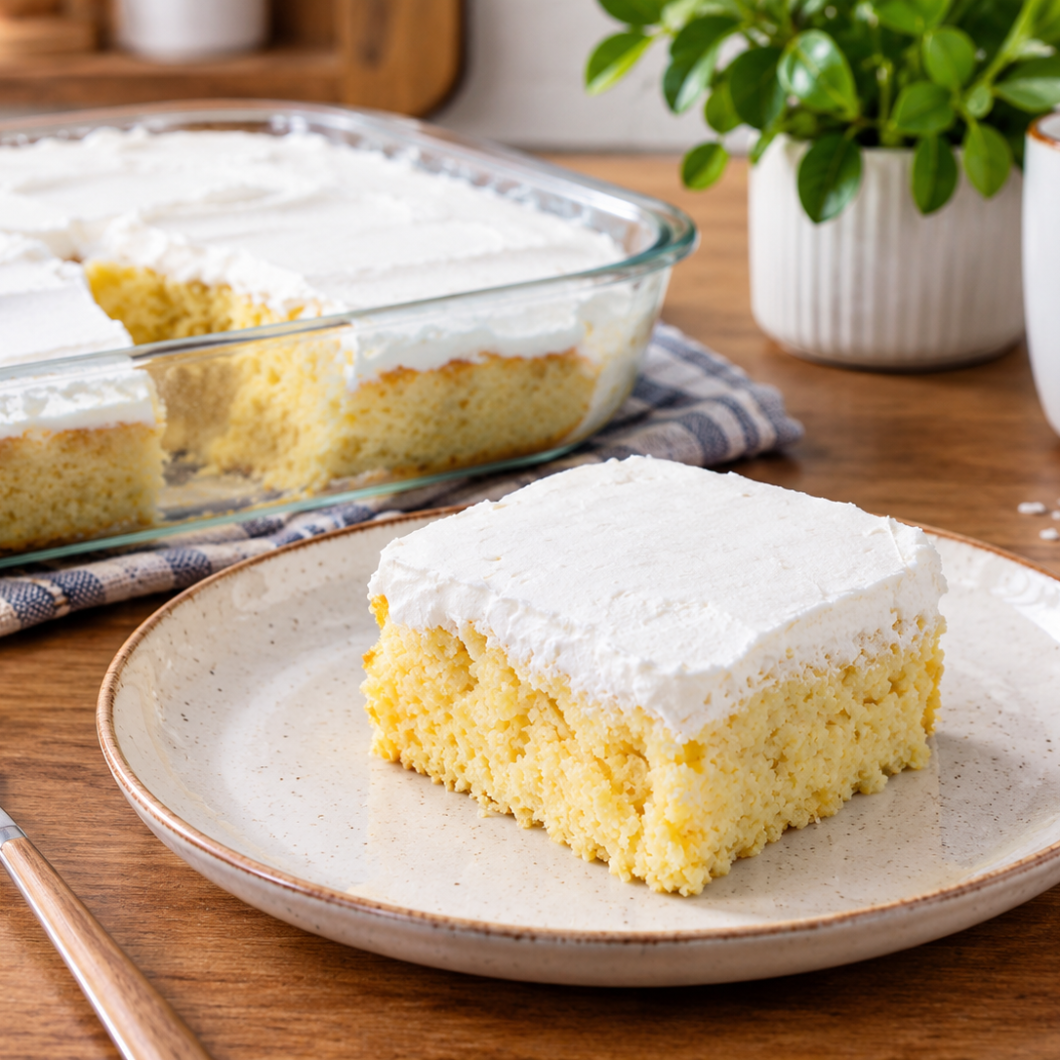
Low Calorie Greek Yogurt Cake
 Recipe by admin1
A simple low-calorie Greek yogurt cake made with sugar-free yellow cake mix, nonfat vanilla Greek yogurt, and water.
1/24
servings10
minutes35
minutes70
kcal45
minutesIngredients
1 box Pillsbury sugar-free yellow cake mix
2 individual containers (5.3 oz each) nonfat vanilla Greek yogurt
1 cup water
Directions
- Set the oven to 325 degrees F and allow it to fully preheat.
- Add the cake mix, nonfat vanilla Greek yogurt, and water to a medium-sized mixing bowl. Mix on medium speed for 2–3 minutes, or until the batter is smooth and no lumps remain.
- Spray a 9×13-inch baking pan with nonstick spray. Pour the prepared batter into the pan and spread it evenly across the surface.
- Place the pan in the preheated oven and bake at 325 degrees F for 34–38 minutes, or until a toothpick inserted into the center comes out clean.
- Allow the cake to cool completely before adding Cool Whip or your preferred frosting.
Notes
- A cake mix weighing approximately 15–16 ounces can be used. Regular or sugar-free varieties may work, and different flavors can be used for variation.
- Different yogurt flavors can be substituted, but choose a smooth yogurt without chunks of fruit for the best batter consistency.
- To make cupcakes, use the cake mix package’s cupcake baking directions. Individual cupcakes will generally require less baking time than a full 9×13-inch cake.
Nutrition Facts
- Total number of serves: 1
- Calories: 70kcal
- Fat: 2g
- Carbohydrates: 16g
- Fiber: 1g
- Sugar: 1g
- Protein: 2g


