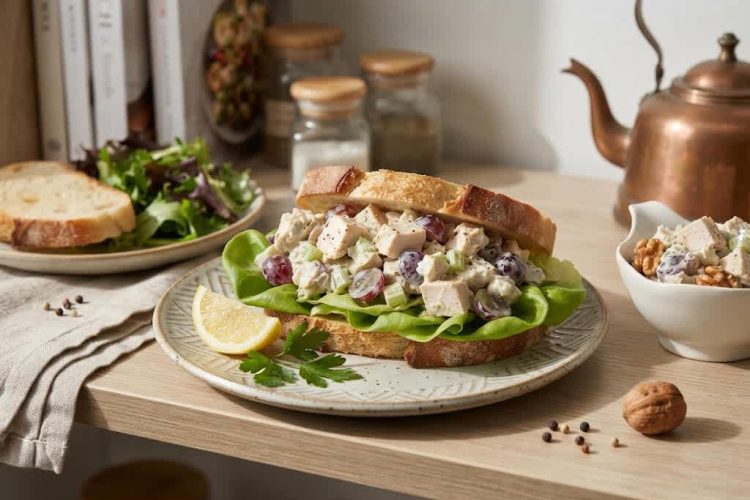
This high-protein chicken salad is a quick, creamy, and satisfying lunch that comes together in just 10 minutes. Tender cooked chicken is combined with crisp celery, juicy grapes, red onion, crunchy pecans, and fresh parsley, then coated in a tangy Greek yogurt dressing.
With more than 24 grams of protein per serving, this easy chicken salad is a practical choice for a protein-rich lunch, light dinner, or filling snack.
Why You’ll Love This Chicken Salad
A good chicken salad should be more than simply cooked chicken mixed with dressing. The combination of textures and flavors is what makes this recipe especially enjoyable. The chicken provides a hearty, savory base, while grapes add small bursts of natural sweetness. Crisp celery and red onion bring freshness and crunch, and pecans contribute a pleasant nutty flavor. Fresh parsley ties everything together without overpowering the other ingredients.
Instead of using mayonnaise as the main dressing ingredient, this recipe uses plain Greek yogurt. Greek yogurt gives the salad a naturally creamy texture while adding protein to every serving. Lemon juice and Dijon mustard provide brightness and tang, while sea salt, garlic powder, and black pepper round out the flavor. The result is a creamy high-protein chicken salad that feels satisfying without being overly heavy.
An Easy 10-Minute Lunch
One of the biggest advantages of this recipe is how little preparation it requires. Once the chicken has been cooked, the remaining ingredients only need to be chopped, measured, and combined. There is no complicated cooking process, no long list of steps, and no need to prepare a separate elaborate sauce. Everything comes together in a single large mixing bowl and a small bowl for the dressing.
This makes the recipe particularly useful when you need lunch in a hurry. It can also help turn leftover chicken into a completely different meal. Rather than reheating the same chicken again, you can shred or chop it and combine it with fresh ingredients for a creamy chicken salad that feels new and flavorful.
What Makes It High in Protein?
The main protein source in this chicken salad is cooked chicken, which provides the substantial foundation of the recipe. Greek yogurt adds another useful source of protein while also creating the creamy consistency that makes chicken salad so appealing. According to the nutritional information provided for this recipe, one serving contains 24.2 grams of protein.
That protein content makes this recipe suitable for people who are looking for easy ways to include more protein in their meals. It works especially well as a convenient lunch after a busy morning or as part of a meal-prep routine. Pairing the protein-rich chicken and Greek yogurt with vegetables, fruit, and nuts also creates a mixture with different textures and flavors.
The Role of Greek Yogurt
Plain Greek yogurt is an important part of this recipe because it serves two purposes at the same time. It creates the creamy dressing that holds the chicken salad together and contributes additional protein. Its mild tang also works naturally with lemon juice and Dijon mustard, giving the dressing a fresh and slightly sharp flavor.
For the best flavor and texture, the recipe notes recommend using 2% or 4% Greek yogurt. These varieties provide a creamy consistency that works particularly well in chicken salad. Because the yogurt is combined with several other ingredients, its tangy flavor becomes balanced by the sweetness of the grapes, the richness of the pecans, and the savory chicken.
Fresh Ingredients Create Better Texture
Texture is one of the reasons this easy chicken salad is so enjoyable. The chicken should be chopped or shredded into bite-sized pieces so it is easy to scoop and eat. Grapes add a juicy, tender texture, while celery provides a crisp contrast. Finely diced red onion gives the salad a little bite, and chopped pecans bring a satisfying crunch.
Fresh parsley adds a subtle herbal note and helps keep the overall flavor bright. These ingredients work together rather than competing with one another. Each one contributes something different, which means every spoonful can contain a combination of creamy, crunchy, sweet, savory, and tangy elements.
How to Make High-Protein Chicken Salad
Start by preparing the chicken, grapes, celery, red onion, pecans, and parsley according to the ingredient list. Place these ingredients in a large mixing bowl and gently combine them. Mixing the solid ingredients first helps distribute the grapes, vegetables, nuts, and herbs throughout the chicken before the dressing is added.
Next, prepare the creamy Greek yogurt dressing in a separate bowl. Add the plain Greek yogurt, lemon juice, Dijon mustard, sea salt, garlic powder, and black pepper. Whisk until the ingredients are evenly blended. The dressing should have a smooth, creamy consistency with the lemon and mustard providing a noticeable but balanced tang.
Pour the prepared dressing over the chicken mixture and gently fold everything together. Folding instead of aggressively stirring helps keep the grapes and other delicate ingredients intact. Continue mixing until the chicken and fresh ingredients are evenly coated. Taste the finished salad and adjust the salt or pepper if needed.
Although the chicken salad can be served immediately, chilling it in the refrigerator gives the flavors additional time to come together. The cool temperature also makes the creamy salad particularly refreshing. Once chilled, it can be served with crackers, spooned onto lettuce leaves, or spread over toast.
Choosing the Chicken
This recipe is particularly convenient when you already have cooked chicken available. Leftover chicken can be chopped or shredded and used directly in the salad. The chicken should be tender and suitable for eating cold because it forms the largest portion of the finished dish.
Both chopped and shredded chicken work well. Chopped chicken creates more defined pieces throughout the salad, while shredded chicken blends more closely with the creamy Greek yogurt dressing. Whichever texture you prefer, aim for pieces that are small enough to combine easily with the grapes, celery, onion, and pecans.
Sweet Grapes and Savory Chicken
Grapes may seem like an unexpected ingredient in a savory chicken salad, but their natural sweetness works beautifully with the other components. Cutting the grapes into quarters makes them easier to distribute throughout the salad and ensures that you get small pieces of fruit rather than large bites.
The sweetness of the grapes provides contrast against the savory chicken and tangy dressing. When combined with crunchy pecans and fresh celery, they also contribute to the variety of textures that makes this salad more interesting than a basic chicken-and-dressing mixture.
Pecans Add Crunch
Pecans provide a rich, nutty flavor and a satisfying crunch. Because the chicken and Greek yogurt are both soft, the nuts help introduce another texture to the dish. Chopping the pecans into smaller pieces makes them easier to distribute evenly throughout the salad.
The recipe notes also mention that pecans can be replaced with other nuts such as chopped walnuts or sliced almonds. If you are preparing the recipe with ingredients already available in your kitchen, this provides a simple way to adapt the texture while keeping the overall character of the salad.
Serving Ideas
There are several simple ways to serve this high-protein chicken salad. For a crisp and lighter presentation, spoon it into lettuce leaves. The cool, crunchy lettuce complements the creamy chicken mixture and provides an easy handheld option. It can also be served alongside crackers when you want something quick and convenient.
Toast is another straightforward serving option. Spread the chicken salad over your favorite toast for a more substantial lunch. Because the salad already contains chicken, Greek yogurt, fruit, vegetables, and pecans, it can work as a complete-feeling meal without requiring a complicated side dish.
Meal Prep Chicken Salad
This recipe is particularly useful for meal preparation because it can be made ahead and stored in the refrigerator. According to the provided recipe notes, the chicken salad can keep in the refrigerator for up to four days. This makes it convenient to prepare once and use for several lunches or snacks during the week.
For meal prep, place the finished chicken salad in a suitable airtight container and refrigerate it promptly. When you are ready to eat, simply portion out the amount you need and serve it with crackers, lettuce leaves, or toast. Keeping the serving accompaniments separate can help maintain their desired texture.
Storage and Meal-Prep Notes
Proper refrigeration is important when preparing chicken salad in advance. Store the finished salad in the refrigerator and keep it chilled until serving. The provided recipe notes indicate that it can be kept in the refrigerator for up to four days, making it a practical option for planned lunches.
Because this chicken salad contains Greek yogurt, fresh produce, cooked chicken, and other perishable ingredients, it should not be left sitting at room temperature for extended periods. For meal prep, divide it into individual portions if convenient. This makes it easier to grab a serving when you need a quick protein-rich meal.
Flavor and Nutrition in One Simple Recipe
This recipe combines several ingredients that contribute different qualities to the finished dish. Chicken and Greek yogurt provide the protein foundation, grapes add sweetness, celery and red onion provide freshness and crunch, and pecans bring richness and texture. Lemon juice and Dijon mustard give the dressing brightness, while parsley, garlic powder, sea salt, and black pepper complete the seasoning.
The provided nutrition information lists 213 calories and 24.2 grams of protein per serving. It also provides 8 grams of total fat, 10.4 grams of carbohydrates, and 1.8 grams of dietary fiber per serving. These figures make the recipe easy to evaluate when planning meals around your individual nutritional needs.
Why This Recipe Works for Busy Days
A successful quick lunch does not need a complicated cooking process. This high-protein chicken salad demonstrates how a few fresh ingredients can be combined with cooked chicken and a simple yogurt dressing to create something filling and flavorful. The entire preparation time is listed as 10 minutes, making it suitable for days when time is limited.
It is also flexible in how it can be served. You can prepare the mixture ahead of time and choose your preferred accompaniment when you are ready to eat. Whether served with crisp lettuce, crackers, or toast, the creamy chicken salad offers a convenient way to turn basic cooked chicken into an enjoyable meal.
Creamy High-Protein Chicken Salad
 Recipe by admin1
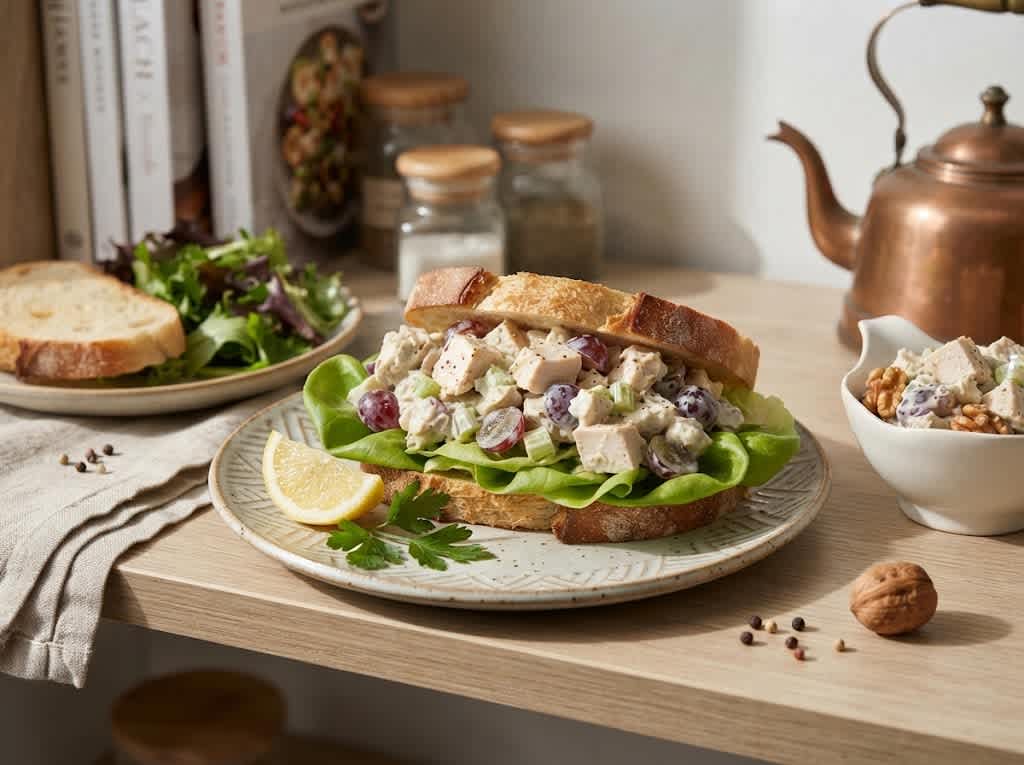
A creamy, fresh, and satisfying high-protein chicken salad made with tender chicken, plain Greek yogurt, grapes, crunchy celery, red onion, pecans, and fresh parsley.
4
servings10
minutes213
kcal10
minutesIngredients
3 cups chopped or shredded chicken (about 12 oz)
¾ cup quartered grapes
2 stalks celery, finely diced
⅓ cup finely diced red onion
¼ cup chopped pecans
2 tablespoons chopped fresh parsley
¾ cup plain Gree yogurt
1 tablespoon lemon juice
1 tablespoon Dijon mustard
½ teaspoon sea salt
¼ teaspoon garlic powder
¼ teaspoon black pepper
Directions
- Place the chopped or shredded chicken, quartered grapes, diced celery, red onion, chopped pecans, and fresh parsley in a large bowl. Gently mix until the ingredients are distributed evenly.
- In a separate bowl, whisk together the plain Greek yogurt, lemon juice, Dijon mustard, sea salt, garlic powder, and black pepper until smooth and well combined.
- Pour the Greek yogurt dressing over the chicken mixture. Fold gently until the chicken, fruit, vegetables, nuts, and herbs are evenly coated with the dressing.
- Taste the chicken salad and add additional salt or black pepper if needed.
- Refrigerate the chicken salad until chilled. Serve with crackers, lettuce leaves, or toast.
Notes
- Use 2% or 4% Greek yogurt for a creamy texture and good flavor.
- Pecans can be replaced with chopped walnuts or sliced almonds if desired.
- For meal prep, keep the prepared chicken salad refrigerated and use it for lunches or snacks throughout the week.
- The chicken salad can be stored in the refrigerator for up to 4 days.
Nutrition Facts
- Total number of serves: 1
- Calories: 213kcal
- Fat: 8g
- Carbohydrates: 10.4g
- Protein: 24.2g


