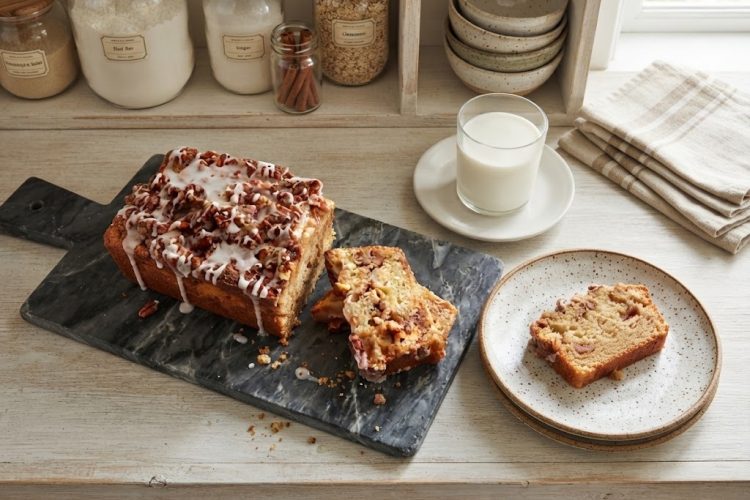
There is something especially comforting about the combination of apples, cinnamon, brown sugar, and vanilla glaze, and this sourdough apple fritter bread brings all of those flavors together in an easy homemade loaf. Instead of making traditional fried apple fritters, this recipe turns the same cozy flavors into a soft quick bread that can be baked in a standard loaf pan. The result is tender, buttery, fruit-filled, and finished with a thin vanilla glaze that adds just the right amount of sweetness.
This sourdough apple bread is also an excellent way to use sourdough discard. A full cup of discard is incorporated into the batter, giving the loaf a subtle tang that balances the sweetness from the apples, sugars, streusel-style cinnamon topping, and glaze.
The sourdough discard also contributes moisture and depth to the crumb, making this more flavorful than an ordinary apple quick bread. If you regularly maintain a sourdough starter, this recipe gives you a useful and delicious way to turn leftover discard into a dessert-style loaf.
What Makes This Apple Fritter Bread Different?
Traditional apple fritters are usually made from a dough or batter that is portioned and fried, then coated or drizzled with glaze. This version takes the familiar flavor profile and transforms it into a simple baked loaf. There is no yeast, kneading, shaping, or proofing involved. Instead, the ingredients are combined into a thick batter, layered with cinnamon-coated diced apples, topped with brown sugar and cinnamon, and baked until golden and set.
One of the most important details is the way the apples are layered. Rather than placing all of the fruit in one central section, the diced apples are divided into two portions. Half goes over the first layer of batter and the remaining half is added toward the top. This simple technique spreads the apple flavor throughout the loaf, so slices contain fruit in more than one area instead of having one concentrated line of apples running through the center.
The batter is intentionally thick. With only 1 1/2 cups of all-purpose flour and a full cup of sourdough discard, the mixture will not resemble a thin cake batter. It should be thick enough to spread into the loaf pan. This consistency helps support the apple pieces while the bread bakes and creates a substantial, tender crumb that works beautifully with the juicy fruit.
Choosing the Best Apples
For the best sourdough apple fritter bread, choose apples that have enough firmness to hold their shape during baking. Granny Smith apples are an excellent choice because their tart flavor contrasts with the sweet brown sugar and vanilla glaze. Their firm texture also helps prevent the apple pieces from becoming completely soft and disappearing into the bread.
You can use another tart or mildly sweet apple variety if Granny Smith apples are not available. The most important consideration is freshness and texture. Avoid apples that are already soft or mealy, because they may release too much moisture while baking. Since the apples are diced into small pieces, they should be reasonably uniform in size so that they cook at approximately the same rate.
Peeling the apples gives the finished loaf a smoother texture and makes the fruit blend more naturally into the soft bread. Dice them into pieces of about 1/4 inch. Small pieces distribute more evenly through the batter and make it easier to cut clean slices without large chunks pulling the loaf apart.
How Sourdough Discard Works in This Recipe
Sourdough discard is one of the key ingredients in this recipe, but it does not make the bread rise in the same way an active sourdough starter would in a traditional fermented loaf. This is a quick bread, and the baking powder provides the primary leavening. The discard is mainly there for flavor, moisture, and texture.
Because sourdough discard is naturally acidic, it provides a mild tang that helps balance the sweetness of the recipe. This is particularly useful here because the loaf contains brown sugar, white sugar, sweet apples, cinnamon sugar, and a powdered sugar glaze. Without that slight acidity, the finished bread could taste overly sweet. The sourdough element gives the flavor profile more contrast and makes each bite taste richer.
There is also no milk in the bread batter itself. The sourdough discard supplies much of the moisture needed for the mixture, while eggs and melted butter contribute richness and structure. This combination creates a thick batter that bakes into a moist and satisfying loaf.
Preparing the Quick Bread Batter
Start by preparing the oven and loaf pan so everything is ready before the batter is mixed. A 9 by 5 inch loaf pan works well for this recipe. Butter the pan generously and dust it with flour, or use parchment paper to make removing the finished loaf easier. Proper preparation is important because the fruit and brown sugar mixture can become sticky around the edges during baking.
Melt the unsalted butter gently and allow it to cool slightly before combining it with the wet ingredients. The butter should remain liquid, but it should not be extremely hot. In a large bowl, combine the all-purpose flour, brown sugar, white cane sugar, baking powder, and salt. Mixing these dry ingredients first helps distribute the baking powder and salt evenly throughout the flour.
In a separate bowl, stir together the sourdough discard, eggs, vanilla extract, and melted butter. Once the mixture is smooth, add it to the dry ingredients. Fold everything together gently until the flour has been incorporated. The resulting mixture will be thick, so use a spatula or sturdy spoon rather than expecting the batter to pour easily.
Avoid excessive mixing at this stage. Once the dry flour has disappeared, stop stirring. Overmixing can make a quick bread unnecessarily dense or tough. A few small lumps are less concerning than aggressively working the batter after the ingredients have already come together.
Preparing the Cinnamon Apple Filling
Peel the apples and cut them into small, even pieces. Add the diced apples to a bowl with the white cane sugar and ground cinnamon, then toss until the fruit is evenly coated. This simple mixture gives the apples a warm cinnamon flavor while allowing their natural tartness to remain noticeable.
The apple mixture is deliberately simple because the bread itself already contains several sources of flavor. There is no need for a complicated cooked apple filling. The apples soften naturally inside the bread while the cinnamon sugar becomes fragrant and slightly caramelized during baking.
For the best result, prepare the apples shortly before assembling the loaf. This keeps them fresh and prevents unnecessary liquid from accumulating in the bowl before they are added to the batter.
Building the Apple Fritter Layers
The layering process is what gives this loaf its characteristic apple fritter effect. Begin by spreading half of the thick batter into the prepared loaf pan. Since the mixture is quite substantial, gently push it toward the corners and edges rather than trying to pour it evenly.
Scatter half of the cinnamon-coated apples over the first layer of batter. Press them lightly into the surface so they become partially surrounded by the batter during baking. Sprinkle half of the brown sugar and cinnamon mixture over the apples. This creates the first sweet cinnamon layer.
Add the remaining batter over the apples. Because the batter is thick, work carefully and spread it gently so that you do not move all of the apple pieces into one area. Once the second layer is in place, add the remaining apples and press them lightly into the surface. Finish with the remaining cinnamon and brown sugar mixture.
This two-level arrangement is important because it distributes the apples through the loaf. It also gives the top a beautiful cinnamon-sugar finish as it bakes, creating the familiar flavor associated with an apple fritter.
Baking the Bread Properly
Bake the assembled loaf in a preheated 350°F (175°C) oven for approximately 60 to 70 minutes. Baking time can vary slightly depending on the oven, loaf pan, and moisture content of the apples. Begin checking the bread around the 40-minute mark. If the surface is becoming deeply brown before the center is finished, loosely cover the loaf with foil.
Do not rely solely on the color of the crust to determine whether the bread is done. Because the loaf contains apples, testing the center requires a little care. Insert a toothpick into the crumb between the apple pieces rather than directly through a large piece of fruit. The toothpick should come out clean when the bread has finished baking.
Allow the loaf to cool in the pan for about 20 minutes. Then carefully turn it out onto a wire rack and let it cool completely. This cooling period is important because the crumb continues to firm as the loaf loses heat. Slicing it too early can result in a crumb that seems softer or more fragile than intended.
Adding the Vanilla Glaze
The vanilla glaze is the finishing touch that gives this bread its apple-fritter character. Combine powdered sugar, vanilla extract, and milk, adding the milk gradually until the desired consistency is reached. The glaze should be thick enough to create visible ribbons as it falls from the whisk but fluid enough to drizzle across the loaf.
Always wait until the bread is completely cool before glazing. If the loaf is warm, the glaze can melt and disappear into the surface rather than forming the thin sweet shell that makes this recipe so appealing. Once drizzled over the loaf, allow the glaze to sit until it sets before slicing.
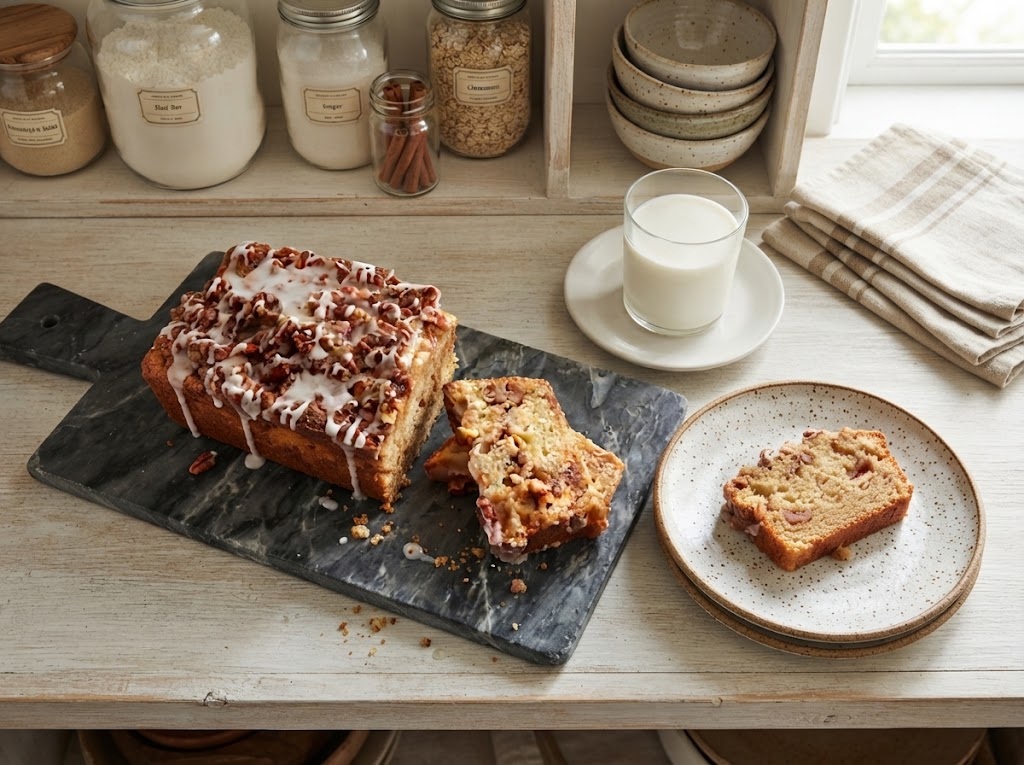
The combination of the crisp-looking glaze, cinnamon-sugar topping, soft apples, and buttery crumb makes the finished bread especially attractive when served on a dessert plate. It works equally well for breakfast, brunch, afternoon coffee, or a simple homemade dessert.
Serving Suggestions
Sourdough apple fritter bread can be served at room temperature once the glaze has set. For a slightly warmer dessert, individual slices can be gently warmed before serving, although the glaze may soften. The bread pairs naturally with coffee, black tea, chai, or a glass of milk.
Because the loaf contains apples and sourdough discard, it has a more developed flavor than many basic quick breads. The cinnamon and brown sugar create a warm bakery-style character, while the vanilla glaze adds sweetness without requiring a thick frosting. A slice is satisfying on its own, making this an easy option when you want a homemade apple dessert without preparing a complicated pastry.
Frequently Asked Questions
Can I make this recipe with active sourdough starter?
This recipe is specifically designed around sourdough discard and uses baking powder as its leavening agent. Active starter is not required. Since the bread is a quick bread rather than a naturally fermented yeast loaf, there is no kneading, proofing, or extended fermentation involved.
Why is my batter so thick?
The batter is supposed to be thick. The recipe contains a relatively high amount of sourdough discard compared with the flour, but it does not contain milk. Eggs, melted butter, and sourdough discard provide the moisture. A thick batter helps hold the apple pieces in place and produces a substantial quick-bread texture.
Can I use sweet apples instead of Granny Smith?
Yes. Granny Smith is recommended because its tartness balances the sweet ingredients, but another firm apple can be used. Choose a variety that holds its shape during baking and avoid apples that are already very soft.
Why should I cool the bread before adding the glaze?
A hot loaf will cause the powdered sugar glaze to melt and become absorbed into the surface. Cooling the bread completely allows the glaze to remain visible and set into the thin, sweet coating associated with an apple fritter.
How do I know when the bread is finished?
The loaf should be deeply golden and set around the edges. Insert a toothpick into the crumb between the apple pieces. When it comes out clean without wet batter, the bread is ready. If the top is browning too quickly while the center still needs time, cover the loaf loosely with foil.
Sourdough Apple Fritter Bread
 Recipe by admin1
A tender sourdough discard quick bread layered with cinnamon-coated apples and brown sugar, then finished with a smooth vanilla glaze.
4
servings30
minutes1
hour306
kcal1
hour30
minutes3
hoursIngredients
- For the Bread
1 1/2 cups Flour, All purpose
1/4 cup Brown Sugar
1/4 cup Sugar, white cane sugar
1 tsp Baking Powder
1/2 tsp Salt
1 cup Sourdough Discard
2 large Eggs
1 tsp Vanilla Extract
6 tbsp Butter, Unsalted, melted
- For the Apple Cinnamon Mixture
3 medium Apples, about 300g, peeled and diced (Granny Smith or similar tart variety works best)
1 tbsp sugar, white cane
1 tsp Ground Cinnamon
- For the Streusel Topping
1/2 cup Brown Sugar
1 tsp Ground Cinnamon
- For the Vanilla Glaze
1/2 cup Powdered Sugar
1/2 tsp Vanilla Extract
1 to 3 tbsp Milk, adjust for desired glaze consistency
Directions
- Preheat the oven to 350°F (175°C). Generously butter a 9 by 5 inch loaf pan and dust it with flour, or line the pan with parchment paper.
- Melt the unsalted butter over low heat or in the microwave. Set it aside and allow it to cool slightly before using.
- In a large mixing bowl, combine the all-purpose flour, brown sugar, white cane sugar, baking powder, and salt. Stir until evenly distributed.
- In a separate bowl, combine the sourdough discard, eggs, vanilla extract, and melted butter. Mix until the ingredients are smooth and well combined.
- Add the wet mixture to the dry ingredients. Fold gently until no dry flour remains. The mixture should be thick rather than pourable. Avoid overmixing.
- Peel and dice the apples into approximately 1/4-inch pieces. Place them in a small bowl and toss with the white cane sugar and ground cinnamon.
- In another small bowl, combine the brown sugar and ground cinnamon for the topping.
- Spread half of the bread batter evenly across the bottom of the prepared loaf pan.
- Scatter half of the cinnamon-coated apples over the batter and gently press them into the surface.
- Sprinkle half of the cinnamon-brown sugar topping over the apples.
- Carefully spread the remaining batter over the first apple layer, taking care to reach the edges of the pan.
- Add the remaining apples to the top and gently press them into the batter. Sprinkle the remaining cinnamon-brown sugar mixture over the surface.
- Bake for 60 to 70 minutes. Begin checking around 40 minutes. If the top becomes deeply browned before the center is finished, loosely cover the loaf with foil.
- Test for doneness by inserting a toothpick into the crumb between the apple pieces. The toothpick should come out clean when the loaf is ready.
- Leave the bread in the pan for approximately 20 minutes, then transfer it to a wire rack and allow it to cool completely.
- For the glaze, whisk together the powdered sugar, vanilla extract, and milk. Add the milk gradually until the glaze reaches a consistency that ribbons from the whisk.
- Drizzle the vanilla glaze over the completely cooled loaf. Allow the glaze to set before slicing and serving.
Nutrition Facts
- Total number of serves: 1
- Calories: 306kcal
- Fat: 8g
- Carbohydrates: 56g
- Fiber: 2g
- Sugar: 34g
- Protein: 4g


