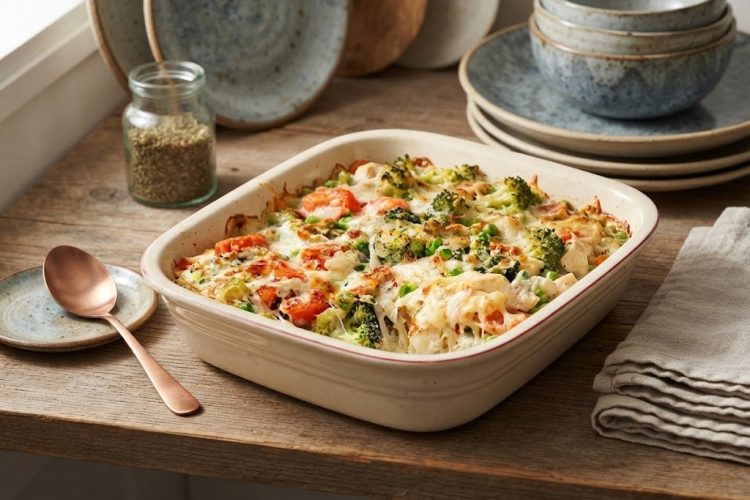
This healthy vegetable casserole is a simple way to turn everyday vegetables into a warm, creamy, and satisfying side dish. Broccoli, cauliflower, carrots, and peas are combined with a smooth homemade vegetable sauce, then finished with melted mozzarella cheese. The result is colorful, comforting, and full of natural vegetable flavor without relying on flour, breadcrumbs, or rice to make the casserole filling.
With a total cooking time of about 30 minutes, this easy vegetable casserole fits comfortably into a busy weeknight meal. The vegetables are briefly cooked before being coated in a creamy sauce made from cauliflower, cream cheese, broth, garlic, and Italian seasoning. A short bake followed by a quick broil gives the mozzarella a bubbly golden finish that makes the dish especially inviting when served straight from the oven.
Why This Vegetable Casserole Works So Well
There are plenty of vegetable casserole recipes that depend heavily on rich sauces or starchy ingredients. This version takes a different approach by using some of the cauliflower as part of the sauce itself. Once blended with cream cheese and broth, the cooked cauliflower becomes thick and smooth enough to coat the vegetables without requiring flour or another traditional thickener.
The combination also creates a pleasant contrast of textures. Broccoli and cauliflower remain tender while still offering some bite, carrots add mild sweetness and color, and peas provide small bursts of freshness throughout the dish. The creamy sauce brings everything together, while mozzarella melts over the top and creates a lightly browned finish.
Another useful feature of this healthy vegetable casserole is its flexibility. Fresh vegetables work particularly well, but frozen peas can be used without any problem. The recipe is also straightforward enough to prepare ahead by washing, cutting, and measuring the vegetables before cooking. When dinner time arrives, the preparation becomes much quicker.
What Makes It a Healthy Vegetable Side Dish
Vegetables naturally provide fiber, color, texture, and a variety of nutrients, making this casserole an easy way to add more produce to a meal. Instead of hiding the vegetables under a heavy coating, the recipe allows them to remain the main ingredient. The creamy sauce is used to complement the vegetables rather than overwhelm them.
The cauliflower has an especially useful role because part of it is blended into the sauce. This gives the casserole its thick consistency while allowing the dish to avoid flour or breadcrumbs. The result is a creamy vegetable casserole that feels comforting while still being centered around broccoli, cauliflower, carrots, and peas.
At approximately 125 calories per serving according to the provided nutritional information, this dish can work well alongside a variety of main courses. Keep in mind that nutritional values can vary depending on the exact brands and ingredients used, so the listed figures should be treated as an estimate rather than a laboratory measurement.
The Vegetables You Need
The main vegetable combination is broccoli, cauliflower, carrots, and peas. Together, these ingredients provide a good balance of color, texture, and flavor. Broccoli brings a slightly earthy taste, cauliflower has a mild flavor and creamy texture, carrots contribute natural sweetness, and peas add a delicate freshness.
Fresh vegetables can be used for the best texture, but frozen peas are specifically suitable for this recipe. The carrots are cooked first because they generally need more time to become tender. Broccoli and cauliflower are added afterward so that they cook without becoming excessively soft.
Keeping the cauliflower in the recipe is particularly useful because some of it becomes part of the sauce. If you change the vegetable combination, try to retain the cauliflower so the sauce can maintain its intended thickness and creamy consistency.
Building the Creamy Sauce
The sauce is the feature that gives this casserole its distinctive texture. Rather than preparing a traditional flour-based white sauce, cooked cauliflower is blended with chicken broth, cream cheese, garlic, Italian seasoning, sea salt, and black pepper. This produces a thick mixture that can be poured directly over the cooked vegetables.
Cream cheese adds richness and gives the sauce a smooth consistency. Chicken broth contributes savory flavor, while garlic and Italian seasoning provide enough seasoning to make the vegetables taste more developed without requiring a long list of spices.
For a vegetarian preparation, vegetable broth can be used instead of chicken broth. The substitution keeps the sauce flavorful while making the dish suitable for a vegetarian meal. If you prefer a different creamy element, sour cream or Greek yogurt can also be considered as alternatives to cream cheese, although the texture and flavor will naturally change.
How to Prepare the Vegetables
Start by preheating the oven to 375 degrees F. While the oven heats, bring a large pot or Dutch oven filled with salted water to a boil. Adding salt to the cooking water helps season the vegetables as they cook.
Add the sliced carrots first and cook them for three minutes. The broccoli and cauliflower then go into the same pot and cook for another two to three minutes. The goal is to make the vegetables tender while preserving enough structure for them to hold their shape during baking.
After cooking, drain the vegetables thoroughly and pat them dry. Removing excess water is important because too much moisture can make the casserole sauce thinner than intended. Once drained, set the vegetables aside while preparing the creamy cauliflower sauce.
How to Make the Creamy Vegetable Casserole
To make the sauce, place half of the cooked cauliflower into a blender. Add the chicken broth, softened cream cheese, Italian seasoning, chopped garlic, sea salt, and black pepper. Blend until the mixture becomes smooth and thick, with no large pieces of cauliflower remaining.
Place the remaining cooked vegetables in a large bowl and add the peas. Pour the blended sauce over the vegetables and gently mix until everything is evenly coated. Try not to stir too aggressively because the cooked vegetables should remain in recognizable pieces rather than becoming mashed.
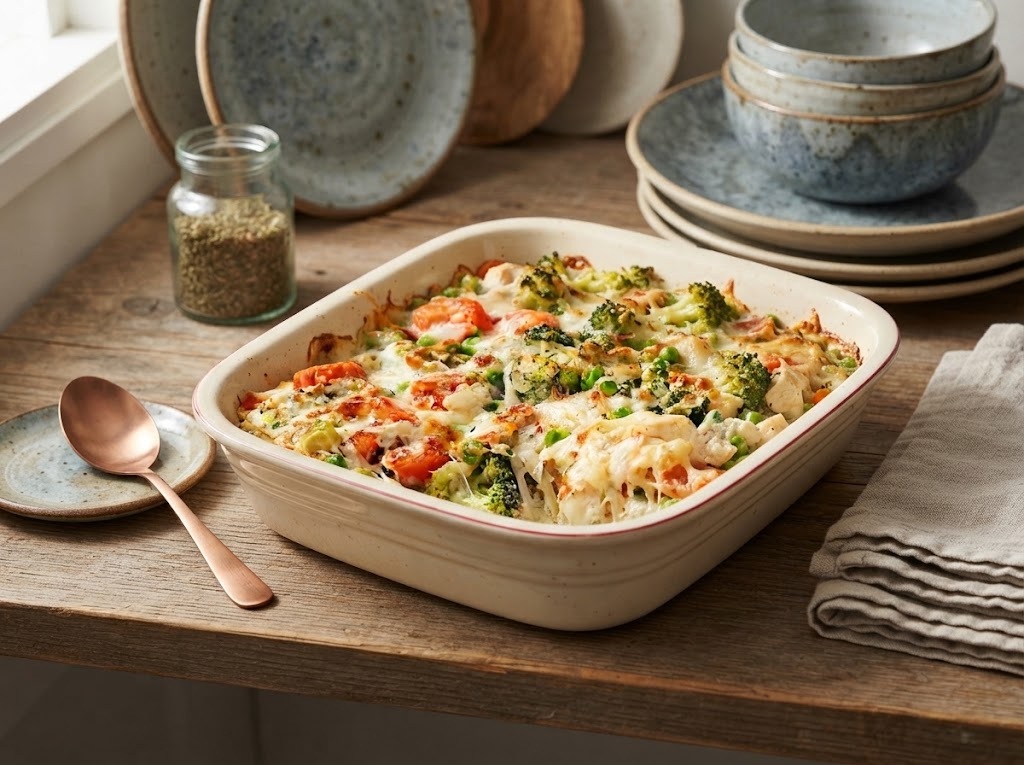
Transfer the coated vegetables to a medium casserole dish and spread them into an even layer. Sprinkle the shredded mozzarella over the top. The cheese will melt during baking and create a golden, bubbling surface after the casserole is briefly placed under the broiler.
Baking and Finishing the Casserole
Bake the casserole for approximately 10 minutes, or until it is thoroughly heated and the mozzarella has melted. Since the vegetables are already cooked before entering the oven, the baking stage is mainly used to warm everything together and melt the cheese.
For a more attractive golden topping, switch the oven to broil and cook the casserole for one to three minutes. Watch it carefully during this stage because cheese can move from golden brown to overly dark very quickly under direct heat.
Once the cheese is lightly browned and bubbling, remove the casserole from the oven. Allowing it to sit for a short time before serving gives the sauce a chance to settle slightly and makes it easier to spoon onto plates.
What to Serve With Vegetable Casserole
This cheesy vegetable casserole can be served as a side dish with many different main courses. Its creamy texture pairs naturally with roasted chicken, grilled meats, baked fish, or other simple protein-based meals. It can also be included as part of a larger family dinner with salad, soup, or another vegetable dish.
Because the casserole already contains several vegetables, it can help simplify meal planning. You do not necessarily need several additional vegetable sides. A straightforward main course and this creamy vegetable bake can create a complete-feeling dinner without requiring complicated preparation.
For a lighter meal, serve smaller portions alongside a fresh salad or another simple dish. For a more substantial family dinner, pair it with a protein and your preferred grain or starch. The mild seasoning makes it easy to fit into different menus.
Easy Preparation Tips
One of the easiest ways to reduce preparation time is to cut the broccoli, cauliflower, and carrots in advance. Store the prepared vegetables properly in the refrigerator until you are ready to cook. This can make the recipe much more convenient on evenings when you have limited time.
Make sure the cream cheese is softened before blending. Room-temperature cream cheese combines more easily with the warm cauliflower and broth, helping the blender create a smoother sauce. If the cream cheese is very cold, the sauce may take longer to become completely smooth.
It is also important not to overcook the vegetables during the boiling stage. They will continue cooking slightly when baked, so they should be tender but not falling apart. Keeping some texture makes the finished casserole much more enjoyable.
Notes for Ingredient Substitutions
Chicken broth can be replaced with vegetable broth when a vegetarian option is needed. Reduced-sodium broth is recommended in the original recipe because additional salt is also used in the cooking water and seasoning.
Fresh garlic provides the strongest flavor, but jarred garlic or garlic powder can be used when fresh cloves are unavailable. The original guidance gives two teaspoons of jarred garlic or one-half teaspoon of garlic powder as alternatives.
Mozzarella creates a mild, stretchy topping, but other good melting cheeses can also work. Cheddar or Monterey Jack can provide a different flavor while still producing a melted cheese topping. If using fresh herbs instead of dried Italian seasoning, remember that fresh herbs are generally less concentrated, so a larger quantity may be needed.
Common Questions About Vegetable Casserole
Can I use frozen vegetables?
Yes, frozen peas work well in this recipe. Other frozen vegetables may also be possible, but their cooking time and water content can differ from fresh vegetables. If you use frozen vegetables, make sure they are properly drained so the finished casserole does not become watery.
Can I make this casserole vegetarian?
Yes. The simplest adjustment is replacing the chicken broth with vegetable broth. The rest of the listed ingredients can remain the same. This creates a vegetarian-friendly vegetable casserole while preserving the creamy texture and savory flavor of the sauce.
Why is cauliflower blended into the sauce?
Cauliflower helps create thickness and body without requiring flour or another starch-based thickener. Blending part of the cooked cauliflower with cream cheese and broth produces the creamy consistency needed to coat the vegetables.
Can I prepare the vegetables ahead of time?
Yes. Washing, cutting, and measuring the vegetables ahead of time can make the recipe faster to assemble. For the best texture, avoid cooking the vegetables far in advance unless you plan to store them correctly and reheat them carefully.
Vegetable Casserole Healthy Recipe
 Recipe by admin1
A creamy and cheesy vegetable casserole made with broccoli, cauliflower, carrots, and peas in a smooth cauliflower-based sauce, finished with melted mozzarella cheese.
10
minutes20
minutes125
kcal2
hours5
minutesIngredients
1 bunch broccoli, cut into large florets; approximately 4 cups
1 head cauliflower, cut into large florets; approximately 4 cups
4 medium carrots, peeled and sliced 1/4 inch thick; approximately 2 cups
1 cup peas, fresh or frozen
1/4 cup chicken broth, reduced sodium, or vegetable broth for vegetarian option
4 cloves garlic, coarsely chopped
4 oz cream cheese, softened at room temperature
1 tsp Italian seasoning
1/4 tsp sea salt, to taste; plus 1-2 tablespoons for salt water
1/4 tsp black pepper, to taste
1/2 cup mozzarella cheese, shredded
Directions
- Preheat the oven to 375 degrees F.
- Fill a large Dutch oven or pot with water. Add approximately 1 tablespoon of salt per quart of water, then bring the water to a boil over high heat.
- Add the sliced carrots and cook for 3 minutes.
- Add the broccoli and cauliflower. Continue cooking for another 2-3 minutes, or until the vegetables are tender.
- Drain the vegetables thoroughly and pat them dry to remove excess moisture.
- Place half of the cooked cauliflower into a blender. Add the chicken broth, softened cream cheese, Italian seasoning, chopped garlic, sea salt, and black pepper.
- Blend the mixture until it becomes smooth and thick.
- Place the remaining cooked vegetables into a large bowl. Add the peas and gently combine.
- Pour the blended cauliflower sauce over the vegetables. Mix carefully until the vegetables are evenly coated.
- Transfer the vegetable mixture to a medium casserole dish and spread it evenly.
- Sprinkle the shredded mozzarella cheese over the top.
- Bake for approximately 10 minutes, or until the casserole is hot and the cheese has melted.
- Broil for 1-3 minutes, watching closely, until the mozzarella becomes golden brown.
- Remove from the oven and serve warm.
Nutrition Facts
- Total number of serves: 1
- Calories: 125kcal
- Fat: 6.5g
- Carbohydrates: 12.5g
- Fiber: 4g
- Sugar: 4.4g
- Protein: 6.2g


