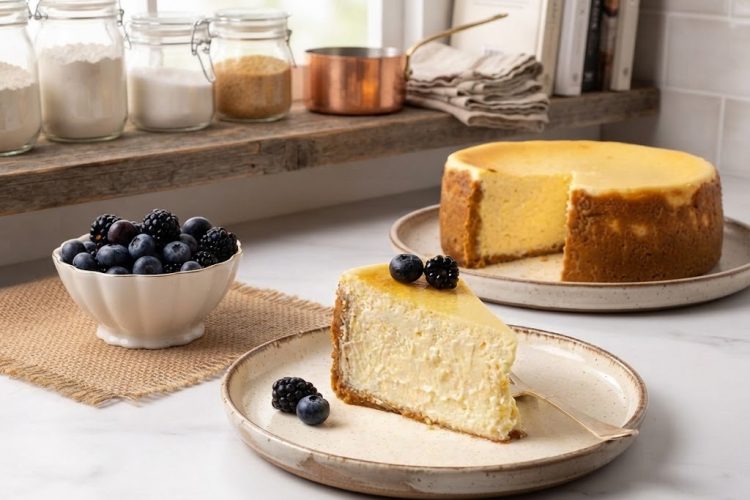
Classic New York cheesecake is famous for its rich flavor, dense texture, creamy center, and buttery Graham cracker crust. Unlike lighter cheesecakes that can feel airy or mousse-like, this traditional American cheesecake is intentionally substantial while remaining smooth and velvety.
The combination of full-fat cream cheese, sour cream, eggs, vanilla extract, and a simple buttery crust creates a dessert that feels luxurious without requiring complicated ingredients or decoration.
A properly baked New York cheesecake should have a firm outer edge and a center that remains slightly soft and jiggly when it leaves the oven. That gentle movement is important because the cheesecake continues to set as it cools and chills. Baking it until the entire surface becomes completely firm can result in an unpleasantly dry texture. The goal is a cheesecake that slices neatly but still feels creamy and rich when eaten.
What Makes New York Cheesecake Different?
The defining characteristic of a New York-style cheesecake is its dense and exceptionally creamy consistency. Cream cheese forms the foundation, while full-fat sour cream adds moisture, richness, and a subtle tang that balances the sweetness. The eggs provide structure, but they should be incorporated gently so the batter does not become filled with excessive air.
The crust is deliberately uncomplicated. Graham cracker crumbs are combined with melted unsalted butter and a small pinch of salt, producing a crisp, slightly sweet base that contrasts beautifully with the soft cheesecake filling. Once baked and chilled, the crust provides enough structure to support generous slices without overpowering the creamy filling.
Another important feature is the restrained flavoring. Vanilla extract gives the cheesecake a warm, natural vanilla character, while freshly squeezed lemon juice adds a small amount of acidity. These ingredients do not make the cheesecake taste strongly of lemon or vanilla; instead, they help create a balanced flavor that keeps the rich cream cheese from tasting overly heavy.
Choosing the Right Ingredients
Ingredient quality matters considerably when preparing a classic baked cheesecake. Because the recipe contains relatively few ingredients, there are not many flavors to hide behind. Full-fat cream cheese is essential for achieving the characteristic richness and smoothness associated with traditional New York cheesecake. Reduced-fat or whipped cream cheese can change both the texture and structure of the finished dessert.
Full-fat sour cream is equally important. It contributes moisture and gives the filling its smooth, silky character. The sour cream also introduces a mild tang that works especially well with the sweetness of the sugar. Skipping this ingredient or replacing it with a substantially different product can produce a cheesecake that feels heavier and less balanced.
Vanilla extract is preferable to vanilla essence when you want a natural vanilla flavor. The vanilla should complement the cream cheese rather than dominate it. Freshly squeezed lemon juice also adds brightness without turning the dessert into a lemon cheesecake.
Why Room-Temperature Ingredients Matter
Bringing the cream cheese, sour cream, and eggs to room temperature before mixing is one of the easiest ways to improve the batter. Cold cream cheese can remain lumpy even after extended mixing, while cold eggs can make an otherwise smooth mixture less uniform. Room-temperature ingredients blend more naturally and help create the exceptionally smooth filling expected from a classic cheesecake.
Allowing the ingredients to warm slightly also reduces the need for aggressive mixing. This matters because excessive beating introduces air into the batter. Air bubbles may expand during baking and later collapse, potentially contributing to cracks or an uneven surface. A smooth cheesecake batter should be mixed thoroughly but gently.
How to Make the Graham Cracker Crust
Begin by melting the unsalted butter gently in the microwave or on the stovetop. Once melted, allow it to cool slightly while preparing the Graham cracker crumbs. The crackers should be processed into fine, even crumbs. A food processor makes this particularly easy, although they can also be crushed inside a sealed bag using a rolling pin.
Combine the crumbs with a pinch of salt, then stir in the melted butter until everything resembles damp sand. The butter should coat the crumbs evenly without creating large wet patches. This mixture becomes the foundation of the cheesecake and should be distributed evenly across the bottom and sides of the springform pan.
Press the crust firmly but evenly using the back of a spoon or a flat measuring cup. Avoid pressing excessively hard because an overly compacted crust can become very firm after baking and chilling. Once shaped, refrigerate or freeze the crust briefly while preparing the oven and filling.
Bake the crust at 350°F (175°C) for approximately 8 to 10 minutes. It should look lightly golden and feel set rather than wet. Allow it to cool completely before adding the cheesecake filling. A cooled crust provides a more stable base and prevents the filling from being exposed to unnecessary heat before the cheesecake goes into the oven.
Preparing the Water Bath
A water bath, also known as a bain-marie, is an important technique for achieving a smooth baked cheesecake. It surrounds the springform pan with gentle, moist heat and helps the cheesecake bake more evenly. This is particularly useful for a thick New York cheesecake because the center needs time to cook without the outer portion becoming dry.
For the water bath, preheat the oven to 325°F (165°C) without using a fan. Select a roasting pan larger than the springform pan. Because water can leak into the springform pan, wrap the outside of the cheesecake pan with at least four or five layers of heavy-duty aluminum foil, covering the bottom and sides carefully.
For additional protection, the foil-wrapped springform pan can be placed inside a large oven-safe bag. The objective is simply to prevent water from reaching the Graham cracker crust. A soggy crust can compromise the texture of an otherwise perfectly prepared cheesecake.
Making the Creamy Cheesecake Filling
Place the room-temperature full-fat cream cheese into the bowl of a stand mixer fitted with a paddle attachment. Mix it at medium-low speed for about two minutes until smooth and free of visible lumps. Scrape the sides and bottom of the bowl so that all of the cream cheese is incorporated evenly.
Add the granulated sugar and continue mixing at medium-low speed for another two minutes. The mixture should become smooth and silky. Scraping the bowl again at this stage helps prevent pockets of unmixed cream cheese or sugar from remaining in the batter.
Next, add the full-fat sour cream, freshly squeezed lemon juice, vanilla extract, and a pinch of salt. Mix briefly on low speed, just until the ingredients are combined. There is no advantage to prolonged beating at this point. The less air incorporated into the mixture, the better.
Lightly whisk the room-temperature eggs separately until blended. With the mixer running on low, slowly add them to the cream cheese mixture. Mix only until the eggs disappear into the batter. Once the mixture is uniform, stop mixing. The finished batter should be thick, glossy, and smooth rather than foamy.
Baking the Cheesecake
Pour the prepared batter into the completely cooled Graham cracker crust. Gently tap the pan against the counter several times to encourage larger air bubbles to rise to the surface. Do this carefully rather than aggressively, especially if the springform pan is already wrapped in foil.
Place the cheesecake inside the prepared roasting pan. Boil water in a kettle and carefully pour it into the roasting pan until the water reaches approximately one-third of the way up the sides of the springform pan. This creates the gentle environment needed for even baking.
Bake the cheesecake at 325°F (165°C) for approximately 60 to 75 minutes. The exact baking time can vary slightly depending on the oven and the depth of the cheesecake. The edges should look set, while the center should retain a small amount of movement when the pan is gently shaken.
Do not wait for the center to become completely firm in the oven. A slight jiggle is desirable because the cheesecake will continue cooking from residual heat. Overbaking is one of the most common causes of dry cheesecake, so learning to recognize the correct visual texture is an important part of the process.
The Gentle Cooling Method
Once the baking time is complete, turn off the oven but leave the cheesecake inside with the door closed for another 60 minutes. This gradual reduction in temperature helps the cheesecake settle instead of experiencing a sudden temperature change. It also reduces the likelihood of a dramatic collapse or surface cracking.
After the hour has passed, carefully remove the roasting pan from the oven and lift the cheesecake out of the water bath. Remove the foil carefully and place the springform pan on a wire rack. Allow the cheesecake to cool at room temperature for approximately one hour.
Once completely cooled, transfer the cheesecake to the refrigerator. It needs at least six hours to become properly firm and fully set, although chilling overnight is an excellent option when preparing the dessert ahead of time. Do not rush this stage because the texture develops significantly during refrigeration.
How to Get Clean Cheesecake Slices
Once the cheesecake has chilled thoroughly, carefully release it from the springform pan. For the cleanest presentation, remove it from the refrigerator and let it sit at room temperature for approximately 20 to 30 minutes before slicing.
Use a sharp knife and dip the blade into hot water. Wipe the knife clean, then make one smooth cut through the cheesecake. Repeat the process for every slice, warming and wiping the knife between cuts. This simple technique helps create smooth, professional-looking slices with clearly defined edges.
The cheesecake can be served completely plain because its rich filling and buttery crust already provide plenty of flavor. If desired, individual portions can be paired with fresh fruit, fruit compote, whipped cream, chocolate ganache, or caramel sauce. Keep toppings separate when possible if you plan to store leftovers.
Common Mistakes to Avoid
One of the biggest mistakes when making baked cheesecake is overmixing the batter. Whipping the cream cheese mixture or eggs introduces unnecessary air, which can expand during baking and affect the surface. Use the mixer only as long as needed to achieve a smooth, evenly combined filling.
Another common problem is using cold ingredients. Cold cream cheese is difficult to smooth properly and can encourage excessive mixing. Bringing the dairy ingredients and eggs to room temperature before beginning gives the batter a much better consistency.
Overbaking is another major concern. A cheesecake should not look completely firm in the center when it comes out of the oven. A gentle wobble is normal. The residual heat and long refrigeration period finish the setting process and help produce the dense yet creamy texture associated with New York cheesecake.
Storing New York Cheesecake
After the cheesecake has completely chilled and set, cover leftovers securely with plastic wrap or aluminum foil. Store the cheesecake in the refrigerator for approximately 3 to 4 days. Keeping it covered helps protect the creamy surface from absorbing refrigerator odors and prevents the edges from drying out.
If you know you will not finish the cheesecake within several days, freezing is a convenient option. The entire cheesecake can be wrapped while still in the springform pan, or individual slices can be wrapped separately. For the best protection, use plastic wrap followed by aluminum foil.
Freezing and Thawing
A properly wrapped cheesecake can be frozen for approximately 2 to 3 months. Individual slices are particularly convenient because they allow you to thaw only the amount needed. Wrap each slice tightly and protect it with an additional layer of foil before placing it in the freezer.
When ready to serve, transfer the frozen cheesecake to the refrigerator and allow it to thaw slowly overnight. Gradual thawing helps preserve the creamy consistency and prevents excessive moisture from developing on the surface. Allow the cheesecake to sit at room temperature briefly before serving for the best flavor and texture.
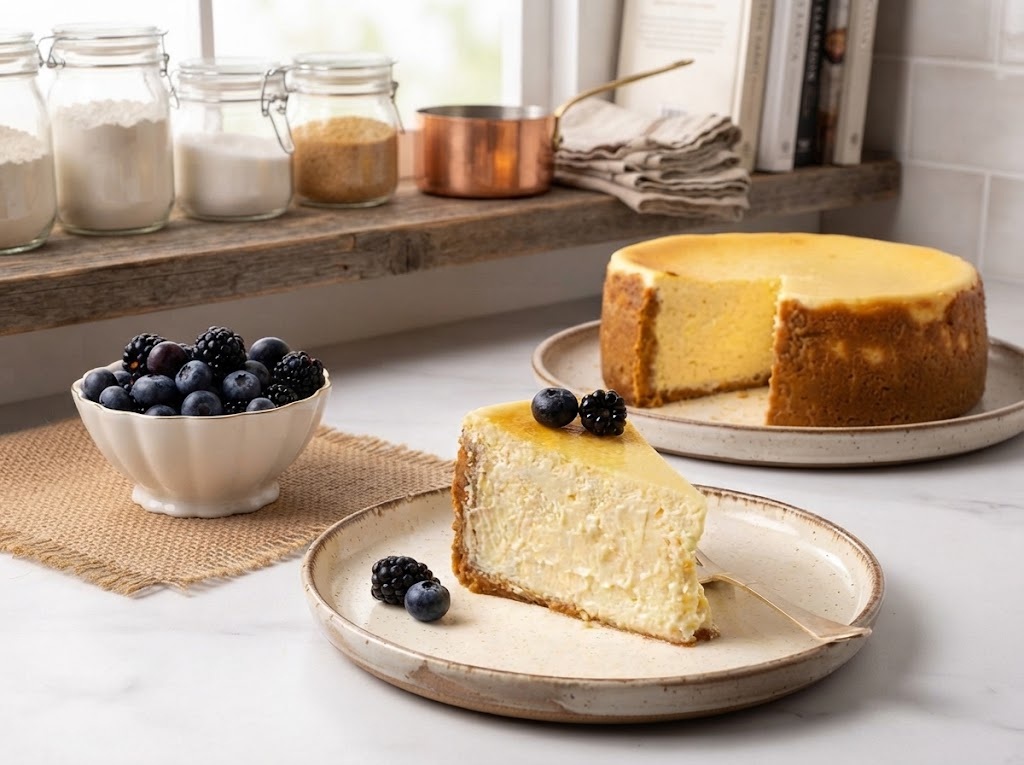
Classic New York Cheesecake
 Recipe by admin1
A rich and creamy classic New York cheesecake made with a buttery Graham cracker crust, full-fat cream cheese, sour cream, vanilla extract, lemon juice, and eggs.
4
servings30
minutes1
hour15
minutes874
kcal6
hours7
hours45
minutesIngredients
- Graham Cracker Crust
300 g (2½ cups) Graham cracker crumbs — approximately 20 sleeves
120 g (½ cup) unsalted butter
Pinch of salt
- Cheesecake Batter
900 g (4 cups) full-fat Philadelphia cream cheese, at room temperature
250 g (1¼ cups) granulated sugar
230 g (1 cup) full-fat sour cream, at room temperature
1 tablespoon freshly squeezed lemon juice
3 teaspoons vanilla extract
Pinch of salt
4 eggs, lightly whisked and at room temperature
Directions
- Melt the unsalted butter gently in the microwave or on the stovetop. Allow it to cool slightly.
- Crush the Graham crackers into fine crumbs using a food processor or place them in a sealed bag and crush them with a rolling pin.
- Mix the Graham cracker crumbs with a pinch of salt. Add the melted butter and stir until the mixture has the consistency of wet sand.
- Press the crumb mixture evenly over the bottom and sides of an ungreased 8- or 9-inch springform pan. Use the back of a spoon or measuring cup to create an even layer.
- Chill the prepared crust in the refrigerator or freezer while preparing the cheesecake filling.
- Bake the crust in a preheated 350°F (175°C) oven for 8–10 minutes, until lightly golden and set. Remove it from the oven and allow it to cool completely.
- Reduce the oven temperature to 325°F (165°C) and use the oven without a fan.
- Select a roasting pan that is larger than the springform pan.
- Wrap the outside of the springform pan with at least 4–5 layers of heavy-duty aluminum foil, making sure the bottom and sides are well covered.
- For additional protection, place the foil-wrapped springform pan inside a large oven-safe bag.
- Place the room-temperature cream cheese in the bowl of a stand mixer fitted with a paddle attachment.
- Mix on medium-low speed for about 2 minutes, until completely smooth. Scrape the sides and bottom of the bowl.
- Add the granulated sugar and continue mixing on medium-low for another 2 minutes, until smooth and silky. Scrape the bowl again.
- Add the room-temperature sour cream, freshly squeezed lemon juice, vanilla extract, and a pinch of salt.
- Mix on low speed for approximately 10 seconds, just until the ingredients are combined.
- Lightly whisk the room-temperature eggs in a separate bowl.
- With the mixer running on low, gradually add the eggs. Mix only until incorporated, approximately 30 seconds. Avoid whipping the mixture.
- our the smooth cheesecake batter into the cooled Graham cracker crust.
- Gently tap the pan against the counter several times to release larger air bubbles.
- Place the cheesecake pan inside the prepared roasting pan.
- Bring water to a boil in a kettle and carefully pour it into the roasting pan until it reaches approximately one-third of the way up the sides of the springform pan.
- Carefully transfer the roasting pan to the oven.
- Bake at 325°F (165°C) for 60–75 minutes. The edges should be set while the center should still have a slight jiggle.
- Turn off the oven after baking and leave the cheesecake inside the closed oven for another 60 minutes.
- Remove the cheesecake from the water bath and carefully unwrap the foil.
- Place the springform pan on a wire rack and allow the cheesecake to cool at room temperature for about 1 hour.
- Refrigerate for at least 6 hours, or preferably overnight, until fully set.
- Release the cheesecake from the springform pan only after it has thoroughly chilled.
- Before slicing, let it stand at room temperature for approximately 20–30 minutes. Use a sharp knife dipped in hot water and wiped clean between cuts for neat slices.
Nutrition Facts
- Total number of serves: 1
- Calories: 874kcal
- Fat: 62g
- Carbohydrates: 68g
- Fiber: 1g
- Sugar: 45g
- Protein: 13g


