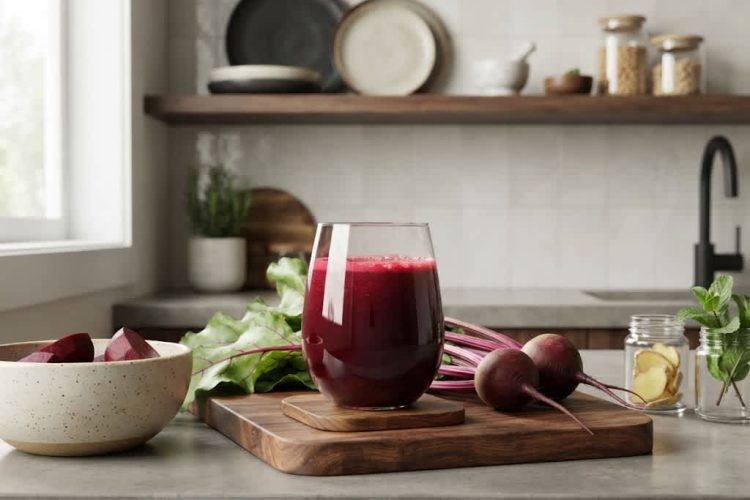
Beetroot Healthy Drink is a vibrant homemade vegetable and fruit juice made with fresh red beetroot, crisp apple, celery, carrot, lemon or lime, and a small piece of ginger. This combination creates a naturally colorful drink with a pleasant balance of earthy, sweet, citrusy, and slightly spicy flavors. It is especially enjoyable at breakfast when you want something refreshing instead of the usual apple or orange juice. Because the ingredients are processed fresh, this drink is best enjoyed immediately after preparation.
Beetroot has become a popular ingredient in healthy juice recipes because it contains naturally occurring compounds called nitrates. These compounds have been studied for their potential role in supporting healthy blood flow and blood pressure. Beetroot juice has therefore attracted considerable attention among people looking for nutritious ways to include more vegetables in their daily diet. While a homemade juice can be part of a balanced eating pattern, it should not be considered a replacement for prescribed treatment or medical advice.
Why Make This Beetroot Juice?
There are plenty of reasons to add a fresh beetroot drink to your breakfast routine. First, it is simple to prepare and requires no complicated cooking techniques. The ingredients are washed, cut into pieces, passed through a juicer, and combined with fresh lemon or lime juice. The entire preparation takes around 10 minutes, making it practical for busy mornings when you still want something fresh and homemade.
The combination of beetroot, apple, carrot, celery, ginger, and lemon gives this juice a more balanced flavor than beetroot alone. Beetroot has a naturally earthy taste that can be quite intense when consumed by itself. Sweet apple and carrot provide natural sweetness, celery contributes a fresh vegetable flavor, while lemon or lime adds brightness. Ginger gives the finished drink a gentle warmth that helps bring all the flavors together.
Beetroot Juice and Heart Health
Beetroot juice is often included in conversations about cardiovascular wellness because beetroot naturally contains dietary nitrates. Research has investigated whether nitrate-rich beetroot products may support blood pressure management by contributing to the production of nitric oxide in the body. Nitric oxide plays a role in blood vessel relaxation and blood flow. For this reason, beetroot juice has become a popular choice among people interested in heart-conscious food and drink options.
However, it is important to keep expectations realistic. Drinking beetroot juice does not guarantee protection from cardiovascular disease, and it should not be used instead of medication or professional medical care. People with high blood pressure should continue following their healthcare professional’s recommendations. This drink can simply be enjoyed as one nutritious addition to an overall balanced diet that includes vegetables, fruits, whole foods, regular physical activity, and appropriate medical care.
The Benefits of Combining Beetroot with Other Fresh Ingredients
One of the best features of this recipe is that beetroot is not used alone. Apple, carrot, celery, lemon or lime, and ginger create a flavorful combination that makes the drink easier to enjoy. Apple brings natural sweetness, which helps soften the strong earthy flavor of beetroot. Carrot contributes additional sweetness and a mild vegetable taste, while celery adds freshness and a light, crisp character to the juice.
Lemon or lime is particularly useful because its acidity brightens the entire mixture. Even a small amount can make the juice taste fresher and less heavy. Ginger adds another layer of flavor without requiring a large quantity. Together, these ingredients create a colorful homemade juice that can be served chilled for breakfast, alongside a light meal, or as a refreshing drink during the day.
Choosing the Right Beetroot
For the best flavor, select a small, firm red beetroot that feels solid when gently pressed. Avoid vegetables that appear excessively soft, damaged, or dried out. Fresh beetroot generally produces a vibrant juice and has a pleasant balance of sweetness and earthy flavor. Smaller beetroot can also be convenient to prepare because they are easier to cut into pieces before processing.
The freshness of the other ingredients matters as well. Choose an apple that is crisp and suitable for juicing. A sweet apple works particularly well because it naturally balances beetroot’s earthy character. However, the recipe allows you to use the type of apple you prefer. Fresh celery stalks and firm carrots will contribute a cleaner, brighter flavor to the finished drink.
Should You Peel the Ingredients?
Whether you need to peel your fruits and vegetables depends partly on their condition and how they were grown. If you are using organic produce and have thoroughly washed it, you may choose not to peel suitable fruits and vegetables. Removing the peel can also be preferable when the skin is tough, damaged, dirty, or unpleasant in flavor.
Regardless of whether you peel them, wash all produce carefully under running water before preparation. Fresh fruits and vegetables can carry dirt and other residues on their surfaces, so proper washing is an important part of preparing homemade juice. Patting the ingredients dry after washing also makes them easier to handle while cutting.
Why Pure Beetroot Juice Is Not Used Here
Pure beetroot juice can have a very concentrated earthy flavor, which may be too strong for some people. This recipe takes a different approach by combining beetroot with fruits, vegetables, lemon or lime, and ginger. The result is a more approachable drink with several complementary flavors rather than the intense taste of beetroot by itself.
Mixing beetroot with other produce also gives the juice a broader ingredient profile. The apple and carrot provide sweetness, celery provides freshness, lemon or lime contributes acidity, and ginger adds mild spice. If you are new to beetroot juice, this type of blended fruit-and-vegetable combination can be an enjoyable way to introduce it into your routine.
How to Prepare Beetroot Healthy Drink
Begin by washing all of the vegetables and fruits under running water. Pat them dry with a clean towel, then prepare each ingredient according to its size and texture. Cut the beetroot into long slices, cut the apple into long pieces after removing its core, and prepare the carrot and celery in long pieces. The ginger should be peeled before it goes into the juicer.
Place a glass or suitable container underneath the nozzle of your juicer. Turn the machine on and process the prepared ingredients. Add the beetroot, apple, carrot, celery, and ginger alternately rather than putting everything through in one large batch. This helps distribute the ingredients through the juicing process and allows their individual flavors to combine.
Once the juice has been extracted, squeeze half a lemon or lime directly into the prepared drink. Stir well so the citrus juice is evenly distributed. Pour the finished beetroot juice into a chilled serving glass and enjoy it immediately. Fresh juice is generally most appealing when served soon after preparation because its flavor, aroma, and freshness are at their best.
When to Drink Beetroot Juice
Breakfast is a convenient time to enjoy this healthy beetroot drink. Its bright flavor and colorful appearance can make a refreshing change from traditional fruit juices. It can be served alongside breakfast foods such as whole-grain toast, eggs, yogurt, or fresh fruit. You can also enjoy it at another time of day when you want a homemade fruit and vegetable drink.
There is no need to make the drink complicated. Its appeal comes from fresh ingredients and straightforward preparation. Serving it chilled can make the earthy beetroot flavor feel lighter and more refreshing. If you prefer a stronger citrus flavor, the lemon or lime can be squeezed thoroughly into the finished juice while keeping the listed ingredient quantity unchanged.
Flavor and Texture
Because this recipe is prepared with a juicer, the finished drink has a smooth, liquid consistency rather than the thicker texture of a smoothie. Beetroot gives it a naturally deep red color, while apple and carrot contribute sweetness. Celery provides a subtle green freshness, and ginger adds a gentle spicy note. Lemon or lime finishes the drink with a bright citrus flavor.
The exact taste can vary slightly depending on the variety and natural sweetness of the produce. A sweeter apple will create a noticeably sweeter juice, while a more tart apple will make the drink sharper. Similarly, the strength of the ginger depends on the particular piece used. These natural variations are normal when preparing fresh juice at home.
Simple Preparation for Busy Mornings
One reason this recipe works well as a breakfast juice is its short preparation time. With approximately 10 minutes of preparation, you can have fresh juice ready without cooking or using a long list of kitchen equipment. Washing and cutting the produce is the main preparation work, followed by juicing and adding the citrus juice.
To make your morning easier, you can wash the produce before breakfast and have the cutting board and juicer ready. However, the juice itself is best prepared shortly before drinking. Keeping the process simple also makes it easier to include more fresh fruits and vegetables in your regular eating routine without turning breakfast into a complicated project.
Frequently Asked Questions
Can I use a different type of apple?
Yes. The recipe specifies one large apple or two small apples, and you can use the apple variety you prefer. A naturally sweet apple works especially well because it helps balance the earthy flavor of beetroot. A tart variety will give the finished juice a sharper and more refreshing taste.
Can I prepare this juice without a juicer?
This recipe is specifically written for a juicer because the ingredients are processed directly through the machine. A blender can produce a different type of drink because it retains the fiber and creates a thicker consistency. If you choose another preparation method, the texture will therefore not be identical to the original juice.
Is beetroot juice good for high blood pressure?
Beetroot contains naturally occurring nitrates, and beetroot juice has been studied for its potential effect on blood pressure. However, individual results can vary, and this drink should not replace prescribed blood-pressure treatment. Anyone managing high blood pressure should continue following their healthcare professional’s advice.
Why is lemon or lime added at the end?
Lemon or lime adds acidity and freshness to the juice. Adding it after the other ingredients have been processed allows its bright citrus flavor to remain noticeable in the finished drink. It also complements the sweetness of apple and carrot and helps balance the earthy character of beetroot.
Beetroot Healthy Drink
 Recipe by admin1
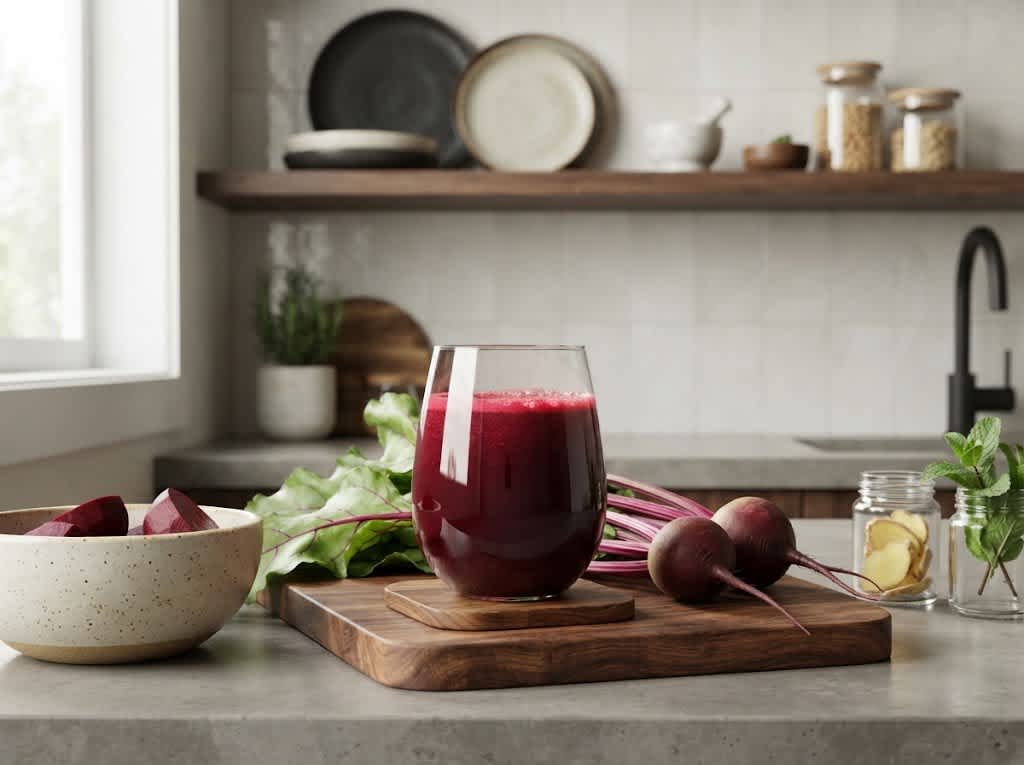
A refreshing homemade beetroot juice made with red beetroot, apple, celery, carrot, lemon or lime, and ginger.
2
servings10
minutes10
minutesIngredients
1 small red Beetroot
1 large Apple (or 2 small apples)
2 Celery stalks
1-2 Carrots
1/2 Lemon or Lime
1/2 inch small piece of Ginger, peeled
Directions
- Wash all vegetables and fruits thoroughly under running water. Pat them dry before cutting and preparing them for the juicer.
- Peel and cut the beetroot into long slices. Cut the apple into long pieces and remove the core. Peel and cut the carrot into long pieces. Cut the celery into long pieces.
- Place a glass or suitable container underneath the nozzle of the juicer. Turn the machine on and make sure the container is positioned correctly to collect the fresh juice.
- Process the beetroot, apple, carrot, celery, and ginger alternately through the juicer. Do not add the lemon or lime at this stage.
- Squeeze the half lemon or lime into the prepared juice and stir thoroughly so the citrus flavor is evenly combined.
- Pour the fresh beetroot juice into a chilled serving glass. Serve immediately for the best fresh flavor and texture.
Notes
- Choose a small, firm beetroot for a fresh and balanced flavor.
- A sweet apple works particularly well, but you can use your preferred apple variety.
- Pure beetroot juice can have a strong earthy flavor, which is why this recipe combines it with fruit and other vegetables.
- Wash all produce thoroughly before juicing.
- If using organic produce, suitable fruit and vegetable skins may be left on after thorough washing.
- Serve the juice immediately after preparation for the freshest taste.
- Beetroot juice should be enjoyed as part of a balanced diet and should not replace prescribed medical treatment.


