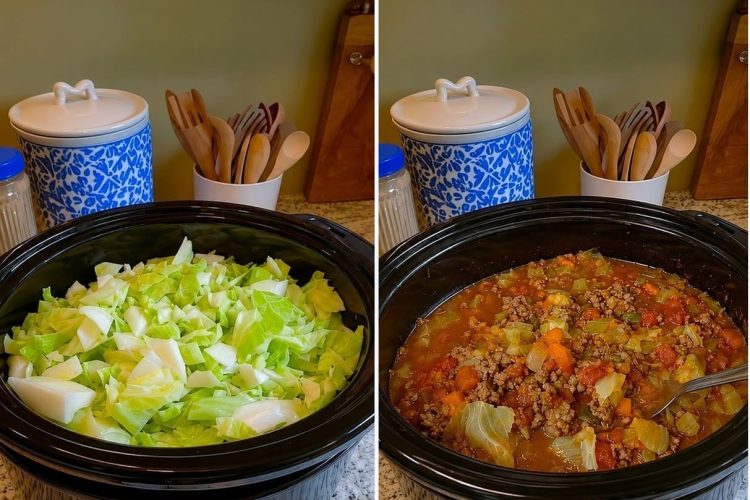
A Hearty Beef and Cabbage Soup for Comforting Meals
This meaty cabbage soup is a hearty homemade meal built around tender beef, fresh cabbage, savory broth, vegetables, herbs, and warming seasonings. The combination creates a rich soup with plenty of texture and flavor in every bowl. Ground beef adds small, savory pieces throughout the broth, while stew meat provides tender chunks that make the soup feel substantial. Cabbage becomes soft as it simmers and absorbs the flavors of the beef, vegetables, and seasonings, making this a comforting choice for a family dinner or a make-ahead meal.
What Makes This Cabbage Soup Special
A good cabbage soup does not need complicated ingredients to develop a satisfying flavor. This recipe takes a layered approach, beginning with bacon and browned beef before adding vegetables, tomato paste, broth, cabbage, and seasonings. Each stage contributes something different to the finished dish. Browning the meat develops deeper savory notes, sautéing the vegetables builds the aromatic base, and gently simmering everything together allows the flavors to become more rounded and balanced.
Building Flavor with Bacon and Beef
The cooking process begins with bacon, which is prepared first so it can release its flavorful drippings into the pot. The rendered fat becomes part of the foundation for browning the beef. Stew meat is cooked until it develops a browned exterior, then ground beef is prepared in the same pot. This approach makes use of the flavorful bits left behind during cooking and helps create a more robust base than simply adding raw meat directly to the broth.
Why Two Types of Beef Work Well
Using both ground beef and stew meat gives this soup a particularly satisfying texture. Ground beef breaks into smaller pieces and spreads throughout the broth, so its savory flavor can be enjoyed in almost every spoonful. Stew meat remains in larger, tender pieces, giving the soup a more substantial bite. The two cuts complement each other and make the finished cabbage soup feel more like a complete main dish than a simple vegetable soup.
Preparing the Cabbage for Soup
Fresh cabbage is an important part of this recipe because it provides both texture and volume. The cabbage should be washed thoroughly, with any damaged outer leaves removed before cutting. After the cabbage is quartered, the firm central core is removed and the leaves are chopped into bite-sized pieces. Raw cabbage can look like a surprisingly large amount when it first goes into the pot, but it gradually wilts and reduces as it cooks, allowing it to become tender and fully incorporated into the soup.
Preparing the Supporting Vegetables
The vegetables create a flavorful foundation for the beef and cabbage. Onion, celery, mushrooms, and green bell pepper are diced or sliced so they can cook evenly. Garlic is finely minced and added later because it needs less cooking time than the other vegetables. Together, these ingredients add savory depth, natural sweetness, aroma, and texture. Cooking them before the broth is added allows their flavors to soften and develop, helping the finished soup taste fuller without requiring complicated preparation.
The Importance of Browning the Meat
Browning the meat is one of the most useful steps in this cabbage soup recipe. Instead of immediately adding the beef to the broth, the stew meat is allowed to cook undisturbed for several minutes so it can develop a browned surface. The ground beef is then cooked until evenly browned. This process gives the meat a deeper savory character and also leaves flavorful browned pieces in the bottom of the pot. Those browned bits can later be incorporated into the broth for additional flavor.
Cooking the Vegetables Until Tender
After the beef has been browned and removed from the pot, the vegetables are cooked in the same cooking vessel. Butter or beef tallow may be used at this stage if needed, according to the source recipe. Onion, celery, mushrooms, and green bell pepper are cooked until they begin to soften. Garlic is added near the end of this stage because it can burn if cooked for too long. Gentle cooking allows the vegetables to become tender while preserving the aromatic qualities that make the soup smell inviting.
Cooking Tomato Paste for Deeper Flavor
Tomato paste is given a short cooking period before the liquid ingredients are added. This is a simple technique that can make a noticeable difference in the flavor of a soup. The paste is spread onto the bottom of the pot and cooked briefly until it darkens slightly. Cooking it this way helps develop a deeper taste and removes the raw flavor that tomato paste can sometimes have when it is added directly to liquid. Once incorporated, it contributes color and richness to the broth.
Combining the Beef, Broth, and Seasonings
Once the vegetables and tomato paste are ready, the browned stew meat and cooked ground beef are returned to the pot. Beef broth and water are then added along with Worcestershire sauce. Stirring the mixture while scraping the bottom of the pot helps loosen the browned pieces created during the earlier cooking stages. The source also calls for sea salt, black pepper, smoked paprika, dried thyme, dried oregano, garlic powder, onion powder, crushed red pepper flakes, and bay leaves, creating a savory seasoning profile with herbs, smokiness, and gentle heat.
Adding the Cabbage to the Pot
The cabbage is added gradually rather than being forced into the pot all at once. Fresh cabbage takes up considerable space before it begins to soften, so adding it in stages makes the process easier. As the leaves are exposed to the heat and broth, they wilt and shrink considerably. Once enough cabbage has softened, more can be added until the entire amount is incorporated. A thorough stir at this stage helps distribute the cabbage evenly among the beef, vegetables, and broth.
Why Gentle Simmering Matters
After the soup reaches a gentle boil, the heat is reduced so the mixture can simmer slowly. The source recommends partially covering the pot and simmering for approximately one hour to one hour and fifteen minutes, with occasional stirring. This slower cooking period gives the stew meat time to become tender and allows the cabbage to soften while retaining some structure. The herbs and seasonings also have time to spread throughout the broth, creating a more integrated flavor rather than one where individual seasonings taste separate.
How to Finish the Soup
When the simmering period is complete, the bay leaves should be removed before serving. The soup can then be tasted and its seasoning adjusted with additional salt or pepper if desired. The source also describes an optional finishing step involving butter and heavy cream, which are stirred into the soup and cooked for another five minutes to create a richer, smoother texture. Allowing the finished soup to rest for about fifteen minutes before serving gives the ingredients time to settle and the flavors time to become more balanced.
Serving Suggestions for Beef Cabbage Soup
This hearty soup can be served on its own as a main meal because it contains beef, vegetables, cabbage, and a flavorful broth. For additional texture and presentation, the source suggests toppings such as fresh chopped parsley, shredded cheddar cheese, sour cream, and crispy bacon pieces. These additions can provide fresh, creamy, cheesy, or smoky elements to each bowl. For a larger meal, suggested accompaniments include keto garlic bread, cheese crisps, buttered low-carb rolls, or creamy cauliflower mash, depending on the style of meal you want to prepare.
Meal Prep and Make-Ahead Benefits
Cabbage soup is especially convenient for meal preparation because a large pot can provide several servings. Once refrigerated overnight, the flavors can become even more blended as the beef, vegetables, cabbage, herbs, and broth continue to mingle. This makes the recipe useful for planned lunches or dinners when you want something already prepared. Instead of cooking a completely new meal every day, portions can be stored and reheated when needed, making this hearty soup a practical option for busy schedules.
How to Store Leftover Cabbage Soup
Proper storage helps maintain the quality of homemade soup after cooking. The source recommends allowing the soup to cool completely before transferring it to airtight containers and refrigerating it for up to five days. For longer storage, portions can be placed into freezer-safe containers with enough room left for expansion. The source gives a freezer storage period of up to three months. When ready to eat, frozen soup can be thawed overnight in the refrigerator before reheating.
Reheating the Soup
This beef cabbage soup can be reheated either on the stovetop or in the microwave. For stovetop reheating, gentle medium-low heat helps warm the soup without aggressively boiling it. When using a microwave, heating in shorter intervals and stirring between intervals helps distribute the heat more evenly. If the soup has thickened during refrigeration, gentle reheating allows the broth to loosen naturally. A small adjustment of seasoning may also be appropriate after reheating, depending on personal taste.
Notes for the Best Results
For the best texture and flavor, pay attention to the order of cooking rather than rushing all the ingredients into the pot at once. Browning the bacon and beef first creates a stronger savory foundation, while cooking the vegetables separately allows them to soften properly. Tomato paste benefits from brief cooking before the broth is introduced. During the final simmer, keep the heat gentle rather than allowing the soup to boil aggressively. These small details help the meat become tender, the cabbage soften properly, and the broth develop a richer overall flavor.
A Practical Homemade Soup for Any Occasion
The appeal of this meaty cabbage soup is its combination of simple preparation and substantial flavor. It can work as a cozy family dinner, a make-ahead lunch, or a convenient meal-prep recipe. Tender beef, softened cabbage, mushrooms, celery, onion, bell pepper, garlic, herbs, and savory broth create a bowl that feels complete without requiring elaborate cooking techniques. The recipe also provides several opportunities to adjust the final presentation through toppings and serving accompaniments while keeping the main soup itself hearty and flavorful.
Keto Meaty Cabbage Soup
Description
A hearty beef and cabbage soup made with ground beef, stew meat, bacon, fresh cabbage, vegetables, beef broth, tomato paste, Worcestershire sauce, herbs, and savory seasonings. The soup is slowly simmered so the beef becomes tender, the cabbage softens, and the flavors develop throughout the broth. The source also includes optional butter and heavy cream for a richer finish.
Preparation & Cooking Duration
Preparation: Not specified in the source
Cooking: Approximately 1 hour to 1 hour 15 minutes of simmering, plus preparation and earlier cooking stages
Resting: Approximately 15 minutes
Total duration: Not specified in the source
Serving
Serving size: Not specified in the source
The soup is described as suitable for several servings and meal preparation.
Ingredients
The uploaded source does not provide quantities, so no measurements have been added or invented.
- Bacon
- Beef stew meat
- Ground beef
- Butter or beef tallow, if needed
- Cabbage
- Onion
- Celery
- Mushrooms
- Green bell pepper
- Garlic
- Tomato paste
- Beef broth
- Water
- Worcestershire sauce
- Sea salt
- Black pepper
- Smoked paprika
- Dried thyme
- Dried oregano
- Garlic powder
- Onion powder
- Crushed red pepper flakes
- Bay leaves
- Heavy cream, optional
- Fresh chopped parsley, for serving
- Shredded cheddar cheese, for serving
- Sour cream, for serving
- Crispy bacon pieces, for serving
The ingredient names above are taken from the uploaded source; the source discusses these ingredients but does not supply their measurements.
Step-by-Step Instructions
1. Prepare the vegetables. Wash the cabbage, remove damaged outer leaves, quarter it, remove the firm core, and chop the leaves into bite-sized pieces. Dice the onion, celery, and green bell pepper. Slice the mushrooms and finely mince the garlic.
2. Prepare the beef. If the stew meat is not already cut, divide it into small cubes and pat it dry. Prepare the ground beef so it is ready to brown.
3. Cook the bacon. Place the bacon in a large Dutch oven or heavy stockpot over medium heat. Cook until crisp, then remove it and set it aside. Leave the rendered drippings in the pot.
4. Brown the stew meat. Add the stew meat to the pot and allow it to brown properly, letting the pieces sit for several minutes before stirring. Remove the browned meat and set it aside.
5. Brown the ground beef. Add the ground beef to the same pot. Break it apart with a wooden spoon and cook until evenly browned.
6. Cook the vegetables. Reduce the heat slightly. Add butter or beef tallow if needed, followed by the onion, celery, mushrooms, and green bell pepper. Cook until the vegetables soften.
7. Add the garlic. Stir in the minced garlic and cook briefly until fragrant, taking care not to burn it.
8. Cook the tomato paste. Push the vegetables aside and place the tomato paste directly against the bottom of the pot. Cook it briefly until it darkens slightly.
9. Add the beef and liquids. Return the browned stew meat and cooked ground beef to the pot. Pour in the beef broth and water, then add Worcestershire sauce. Scrape the bottom of the pot to loosen the browned pieces.
10. Season the soup. Add sea salt, black pepper, smoked paprika, dried thyme, dried oregano, garlic powder, onion powder, crushed red pepper flakes, and bay leaves.
11. Add the cabbage. Gradually add the chopped cabbage, stirring as it wilts and reduces. Continue until all the cabbage has been incorporated.
12. Simmer gently. Bring the soup to a gentle boil, then reduce the heat to low. Partially cover the pot and simmer for approximately one hour to one hour and fifteen minutes, stirring every fifteen to twenty minutes.
13. Check the seasoning. Remove the bay leaves. Taste the soup and adjust the salt or pepper if necessary.
14. Add the optional finishing ingredients. For the richer version described in the source, stir in butter and heavy cream and cook for another five minutes.
15. Rest and serve. Let the soup rest for approximately fifteen minutes before serving. Add optional toppings such as parsley, shredded cheddar cheese, sour cream, or crispy bacon pieces.
Nutritional Information
Nutritional information: Not provided in the uploaded source. Exact calories, protein, carbohydrates, fat, fiber, and other nutritional values cannot be calculated reliably without the ingredient quantities and serving size.
Storage Notes
Cool the soup completely before transferring it to airtight containers. The source recommends refrigerating it for up to five days. For longer storage, place portions in freezer-safe containers, leaving room for expansion, and freeze for up to three months. Thaw frozen portions overnight in the refrigerator before reheating.
Recipe Notes
The most important technique in this recipe is layering the cooking process. Browning the bacon and beef first creates a flavorful foundation, while sautéing the vegetables and briefly cooking the tomato paste develops additional depth. Keep the final simmer gentle so the stew meat has time to become tender and the cabbage can soften without becoming overly broken down.


