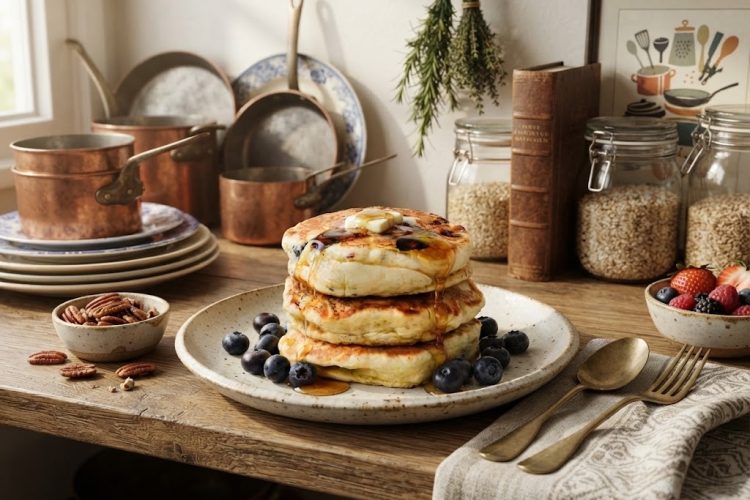
Blueberry cottage cheese pancakes are a delicious way to make a classic breakfast feel a little more satisfying without giving up the soft, fluffy texture you expect from homemade pancakes. Cottage cheese and Greek yogurt add protein and richness to the batter, while fresh blueberries bring natural sweetness and bursts of juicy flavor.
The cottage cheese is blended until completely smooth, so there are no noticeable curds in the finished pancakes. The result is a stack that tastes much closer to traditional diner-style blueberry pancakes than a typical high-protein breakfast.
This easy blueberry pancake recipe comes together in about 30 minutes, making it practical for a relaxed weekend breakfast as well as meal preparation during the week. The blueberries are used in two different ways: some are folded directly into the batter, while additional berries are pressed into the pancakes as they cook. This simple technique gives the pancakes blueberry flavor throughout while keeping plenty of beautiful whole berries visible on the surface.
Why These Pancakes Taste So Good
The secret to the texture is the preparation of the cottage cheese. Rather than adding cottage cheese directly to the batter, it is blended with the eggs, Greek yogurt, melted butter, and vanilla until completely smooth. This creates a creamy wet mixture that distributes evenly through the flour. When cooked, the cottage cheese contributes moisture and richness without leaving little curdled pieces throughout the pancake.
Greek yogurt also plays an important role in the recipe. Its mild tang adds balance to the sweetness of the blueberries and sugar, while its creamy consistency helps produce a tender interior. The combination of cottage cheese and Greek yogurt gives these pancakes a satisfying texture without making them taste overly rich. Together with the eggs, they also provide the protein that makes this breakfast more filling than many traditional pancake recipes.
The blueberries create another layer of flavor and texture. Folding most of them into the batter ensures that berries are scattered throughout the stack, while placing additional blueberries directly onto each pancake gives you distinct fruit in nearly every bite. It also keeps the berries more visible instead of allowing their juices to turn the entire batter purple.
What Makes This Blueberry Pancake Recipe Different
Many cottage cheese pancake recipes rely heavily on blending the ingredients into a thin batter or use cottage cheese as a noticeable component of the final texture. This recipe takes a different approach. The cottage cheese is blended completely smooth, and the batter is then mixed with all-purpose flour to create a thicker, more familiar pancake consistency.
The batter should remain slightly lumpy after the wet and dry ingredients are combined. That is intentional. Pancake batter does not need to be perfectly smooth, and excessive mixing can develop the gluten in the flour. Too much gluten makes pancakes chewy or dense instead of light and tender. A few small lumps are perfectly acceptable and often lead to a better final texture.
Another important detail is the cooking temperature. These pancakes are relatively thick, so medium-low heat works better than a high flame. A very hot skillet may brown the outside before the middle has enough time to cook. Keeping the pan at a moderate temperature allows the pancakes to rise gradually while developing an even golden-brown crust.
How to Make Fluffy Cottage Cheese Pancakes
Begin by preparing the wet mixture. Place the cottage cheese, eggs, plain Greek yogurt, melted butter, and vanilla extract into a blender or food processor. Blend until the mixture is completely smooth. You should not see obvious pieces of cottage cheese remaining. A blender is especially useful because it can create a very smooth consistency quickly, which is important for achieving the classic pancake texture in this recipe.
Next, prepare the dry ingredients in a large mixing bowl. Whisk together the all-purpose flour, granulated sugar, baking powder, baking soda, and kosher salt. Whisking distributes the leavening agents evenly through the flour, which helps the pancakes rise consistently. It also prevents concentrated pockets of baking powder or baking soda from affecting individual bites.
Pour the blended wet mixture into the bowl with the dry ingredients. Use a spatula or wooden spoon to gently combine everything. Avoid vigorous stirring and stop as soon as there are no large areas of dry flour remaining. The batter should be thick enough to hold its shape when poured onto the skillet while still spreading naturally into a pancake.
Fold approximately three-quarters of the blueberries into the batter. Handle them gently so they remain intact. Keep the remaining berries aside because they will be added directly to the pancakes during cooking. This two-stage approach is particularly useful when making blueberry pancakes because it gives you both berries throughout the batter and attractive fruit on top.
Letting the Batter Rest
Allowing the batter to rest for approximately five minutes may seem like a small step, but it can improve the final texture. During this short resting period, the flour absorbs some of the moisture from the wet ingredients, while the leavening agents begin working. The batter becomes slightly more cohesive and is easier to portion onto the hot cooking surface.
While the batter rests, begin heating a large nonstick skillet or griddle over medium-low heat. Add a small amount of butter and spread it across the cooking surface. The pan should be warm enough that a drop of water sizzles and disappears within a few seconds. If the water evaporates immediately and aggressively, reduce the heat before adding the pancake batter.
Cooking the Pancakes Properly
Use approximately one-third cup of batter for each pancake. Leave enough space between pancakes so you can easily slide a wide spatula underneath when it is time to turn them. As soon as the batter is placed on the skillet, gently press several of the reserved blueberries into the surface. This helps the berries become part of the pancake rather than simply sitting on top after cooking.
Let the pancakes cook undisturbed until bubbles begin appearing across the surface and the edges look set. This generally takes around three to four minutes. The underside should have developed an even golden-brown color before you flip the pancake. Rushing this step can cause the pancake to tear or leave the center undercooked.
When the first side is ready, slide a wide spatula underneath and flip the pancake in one confident movement. Cook the second side for approximately two to three minutes, or until golden brown and cooked through. Avoid pressing the pancake down with the spatula. Pressing removes some of the air that developed during cooking and can turn an otherwise fluffy pancake into a flatter, denser one.
Continue cooking the remaining batter in batches. If necessary, add a small amount of butter to the skillet between batches. To keep finished pancakes warm, place them on an oven-safe plate in a low oven while the rest of the batch cooks. This allows you to serve the entire stack together instead of eating pancakes one batch at a time.
Serving Blueberry Cottage Cheese Pancakes
These pancakes are especially good when served warm with a little butter and pure maple syrup. The butter melts into the hot surface, while the maple syrup complements the slightly tangy Greek yogurt and juicy blueberries. Because the pancakes already contain blueberries throughout, they have plenty of fruit flavor even with a relatively modest amount of syrup.
For a more fruit-forward breakfast, additional blueberries can be served alongside the stack. You can also add your favorite pancake toppings if desired, but the simple combination of butter and maple syrup keeps the focus on the fluffy texture and blueberry flavor.
Meal Prep and Storage
One advantage of this recipe is that the pancakes can be prepared ahead of time. Once completely cooled, refrigerate them in a single layer or place parchment between layers to prevent sticking. They can be kept refrigerated for up to four days, making them convenient for breakfast meal prep.
For longer storage, freeze the cooked pancakes for up to two months. Arrange them so they do not freeze into one solid block, then transfer them to a suitable freezer container once firm. When you want breakfast, reheat the pancakes directly from refrigerated or frozen storage using a toaster or toaster oven.
A toaster or toaster oven set to 350°F for approximately three to four minutes provides the best reheating texture because it warms the center while lightly restoring the exterior. A microwave can also be used when speed matters, although microwaving generally produces a softer texture. For a quick weekday breakfast, the microwave remains a convenient option.
Frequently Asked Questions
Can you taste the cottage cheese?
The cottage cheese flavor is very subtle because it is blended completely smooth with the other wet ingredients. Once combined with the flour, vanilla, blueberries, and other ingredients, the finished pancakes have a familiar sweet pancake flavor. The smooth blending process is particularly important for anyone who does not enjoy the texture of cottage cheese.
Why are my cottage cheese pancakes dense?
Dense pancakes are often caused by overmixing, excessive heat, or leaving pieces of cottage cheese unblended. Mix the flour and wet ingredients only until combined, and cook the pancakes over medium-low heat. This gives the center enough time to cook while allowing the pancakes to remain soft and fluffy.
Can frozen blueberries be used?
Yes. Frozen blueberries work well in this recipe and do not need to be thawed first. Fold them into the batter while frozen and use the remaining berries for the tops as directed. Because frozen fruit can cool the batter slightly, the pancakes may need a little additional cooking time.
How should leftover pancakes be stored?
Allow the pancakes to cool before refrigerating or freezing. Refrigerate them for up to four days, using parchment between layers if necessary. For longer storage, freeze them for up to two months and reheat them in a toaster or toaster oven for the best texture.
Fluffy Blueberry Cottage Cheese Pancake Bites
 Recipe by admin1
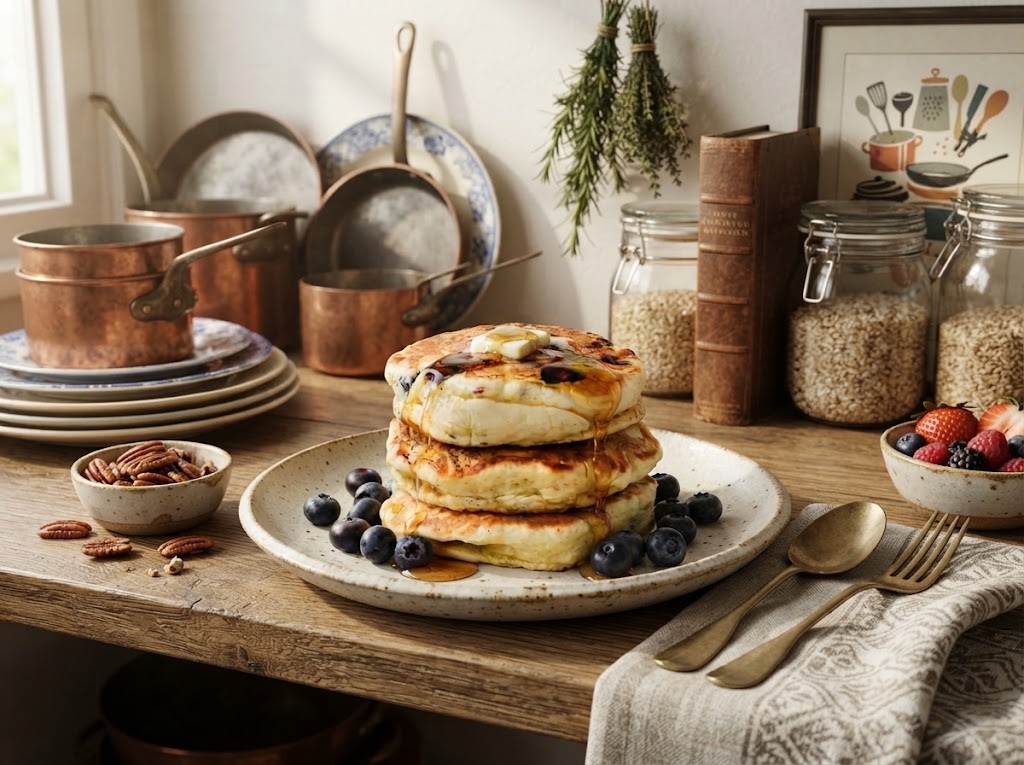
Fluffy blueberry cottage cheese pancakes made with smoothly blended cottage cheese, Greek yogurt, eggs, and fresh blueberries. The cottage cheese disappears into the batter, creating classic-tasting pancakes with a tender texture and approximately 16 grams of protein per serving.
4
servings10
minutes18
minutes417
kcal28
minutesIngredients
- For the Pancake Batter
8 oz cottage cheese, about 1 cup, blended smooth; see Note
2 large eggs
¼ cup plain Greek yogurt
2 tablespoons unsalted butter, melted, plus more for the griddle
1 teaspoon vanilla extract
1½ cups all-purpose flour
2 tablespoons granulated sugar
2 teaspoons baking powder
½ teaspoon baking soda
½ teaspoon kosher salt
- For the Blueberries
1 cup blueberries, divided (about ¾ cup folded into batter, remaining for placing on griddle)
- For Serving
4 teaspoons unsalted butter
1 tablespoon pure maple syrup
Directions
- Add the cottage cheese, eggs, Greek yogurt, melted butter, and vanilla extract to a blender or food processor. Blend for 20–30 seconds, or until completely smooth with no visible cottage cheese curds.
- In a large bowl, whisk together the flour, granulated sugar, baking powder, baking soda, and kosher salt until evenly combined.
- Pour the smooth cottage cheese mixture into the dry ingredients. Stir gently with a spatula or wooden spoon just until combined. A few small lumps in the batter are fine; avoid overmixing.
- Gently fold approximately ¾ cup of the blueberries into the batter. Keep the remaining blueberries aside for adding directly to the pancakes while they cook.
- Let the batter rest for 5 minutes. Meanwhile, heat a large nonstick skillet or griddle over medium-low heat.
- Add approximately ½ teaspoon butter to the cooking surface and spread it evenly. The pan should be hot enough for a drop of water to sizzle and disappear within 2–3 seconds.
- Pour approximately ⅓ cup of batter onto the griddle for each pancake, leaving sufficient space between pancakes.
- Immediately press 5–6 of the reserved blueberries into the top of each pancake.
- Cook for approximately 3–4 minutes, or until bubbles appear across the surface, the edges look set, and the underside is evenly golden brown.
- Carefully flip each pancake using a wide spatula. Cook the second side for approximately 2–3 minutes, until golden brown and cooked through.
- Do not press down on the pancakes after flipping, as this can remove the air that gives them their fluffy texture.
- Transfer finished pancakes to an oven-safe plate and keep them warm in a 200°F oven while cooking the remaining batter. Add a small amount of butter to the griddle between batches when needed.
- Stack the warm pancakes and serve with the reserved butter and pure maple syrup.
Notes
- Blending the cottage cheese completely smooth prevents visible curds and helps create a classic pancake texture.
- Adding blueberries both inside the batter and on the surface gives the pancakes fruit flavor throughout while keeping whole blueberries visible.
- Frozen blueberries can be used without thawing. They may require approximately one additional minute of cooking per side.
- Store refrigerated pancakes in a single layer or with parchment between them for up to 4 days.
- Freeze cooked pancakes for up to 2 months.
- For the best reheating texture, warm pancakes in a toaster or toaster oven at 350°F for 3–4 minutes. Microwave for 30–45 seconds when a quicker option is needed.
Nutrition Facts
- Total number of serves: 1
- Calories: 417kcal
- Fat: 15g
- Carbohydrates: 54g
- Fiber: 2g
- Sugar: 15g
- Protein: 16g


